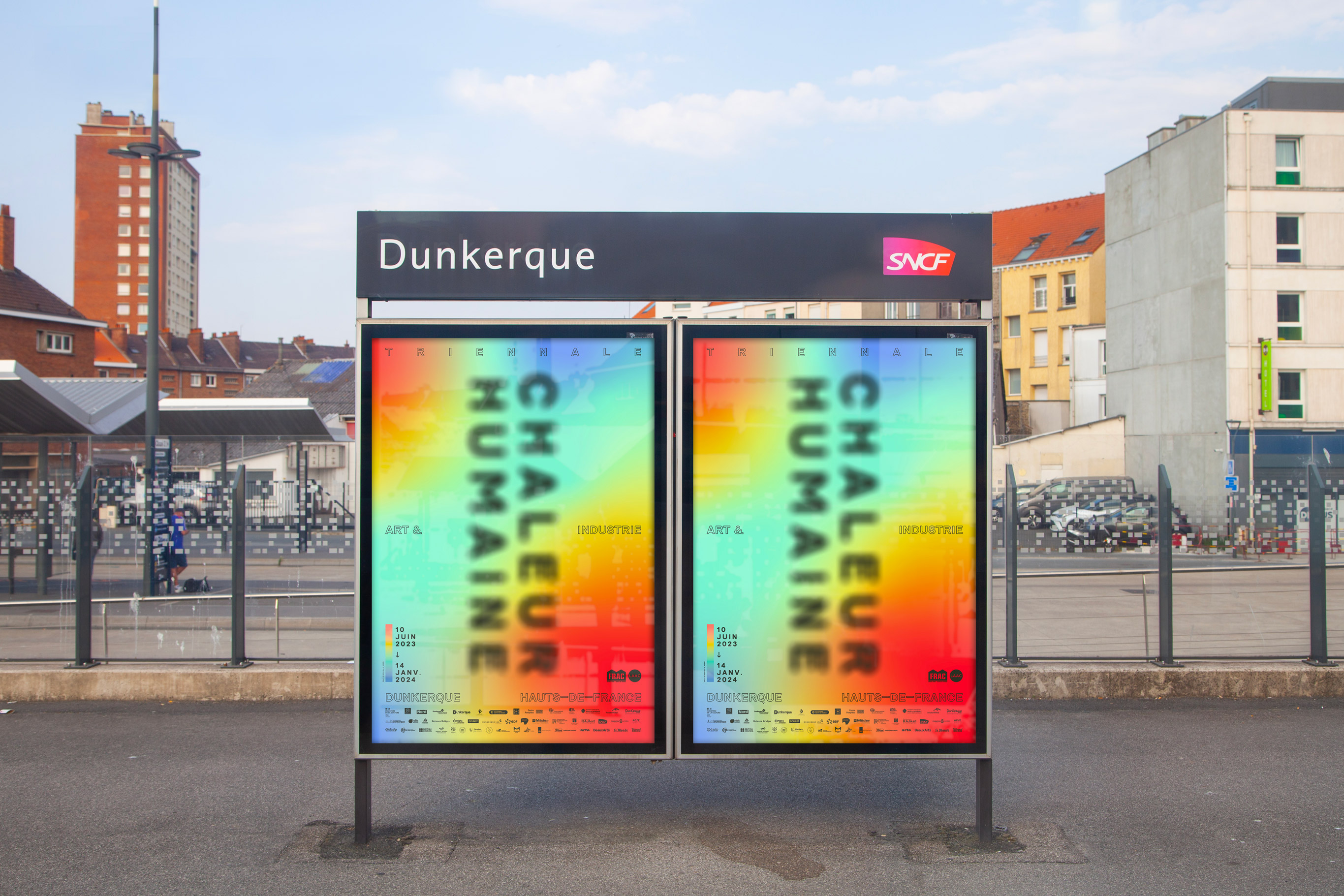
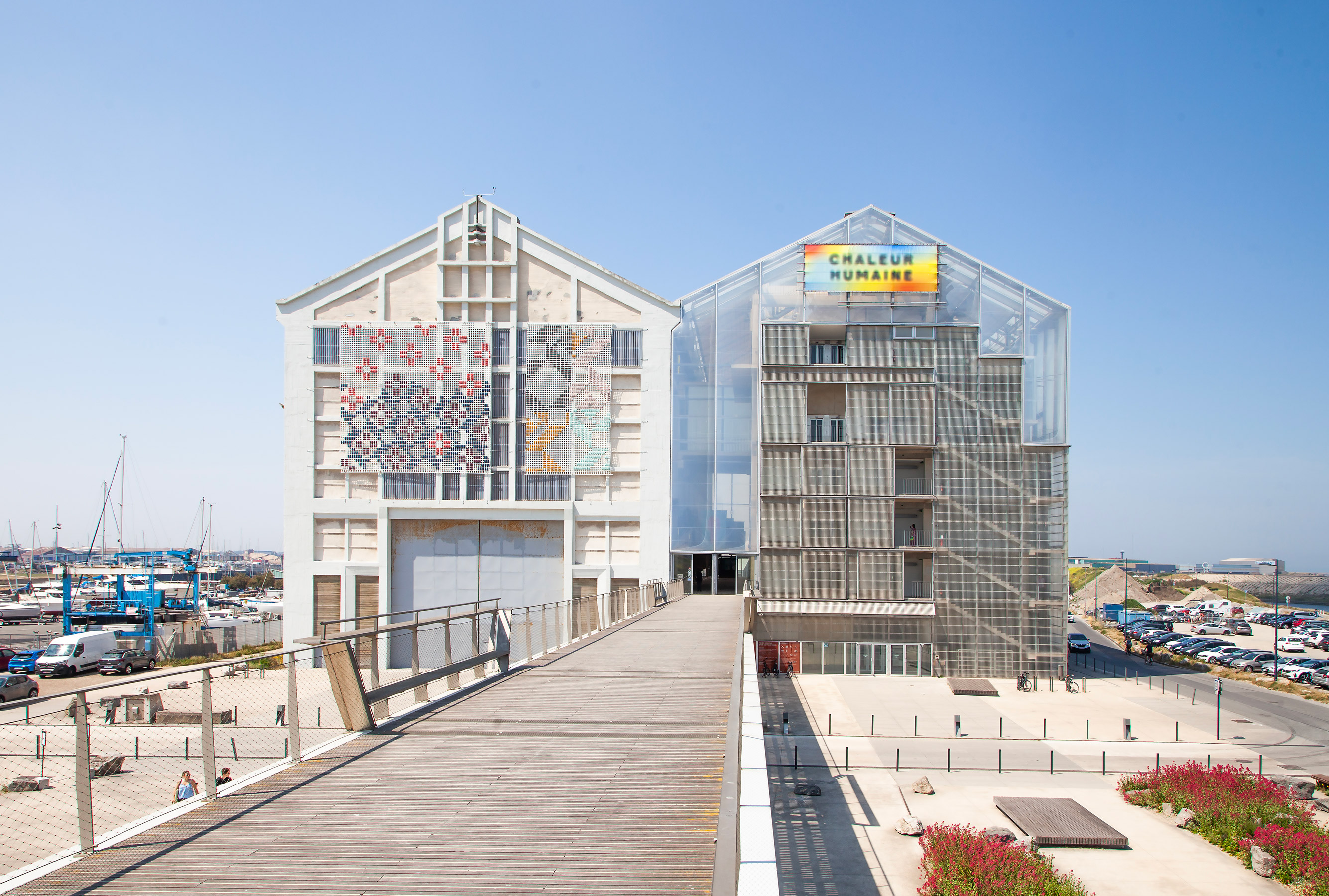
The Art & Industry Triennial, organized by Frac Grand Large — Hauts-de-France and LAAC in Dunkirk, France, held its second edition Chaleur Humaine from June 2023 to January 2024. This edition gives a voice to practitioners who, from the 1970s to the present day, have worked to raise awareness of the energy and ecological challenges facing society today and tomorrow.
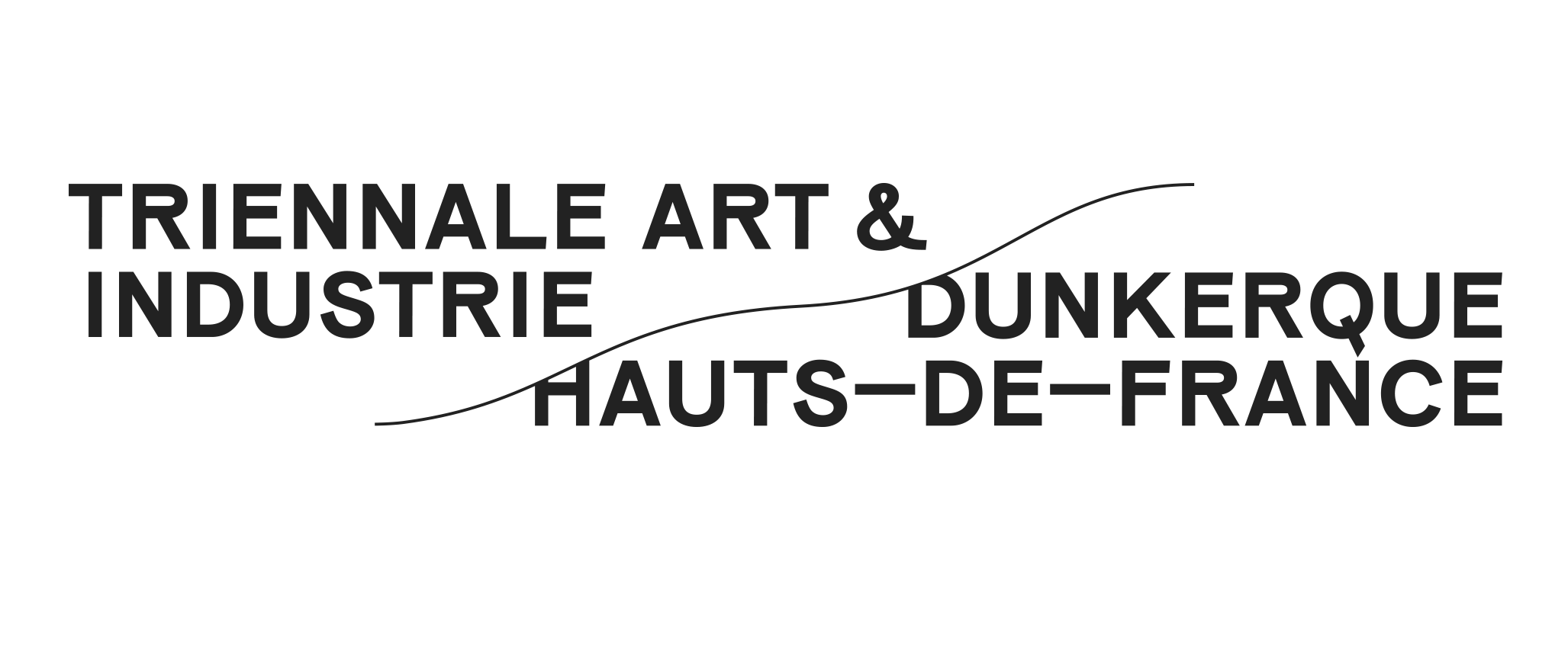

In this context, we were invited to develop and produce two identities: one for the permanent Art & Industry Triennial, and one for Chaleur Humaine, its 2023-24 edition.
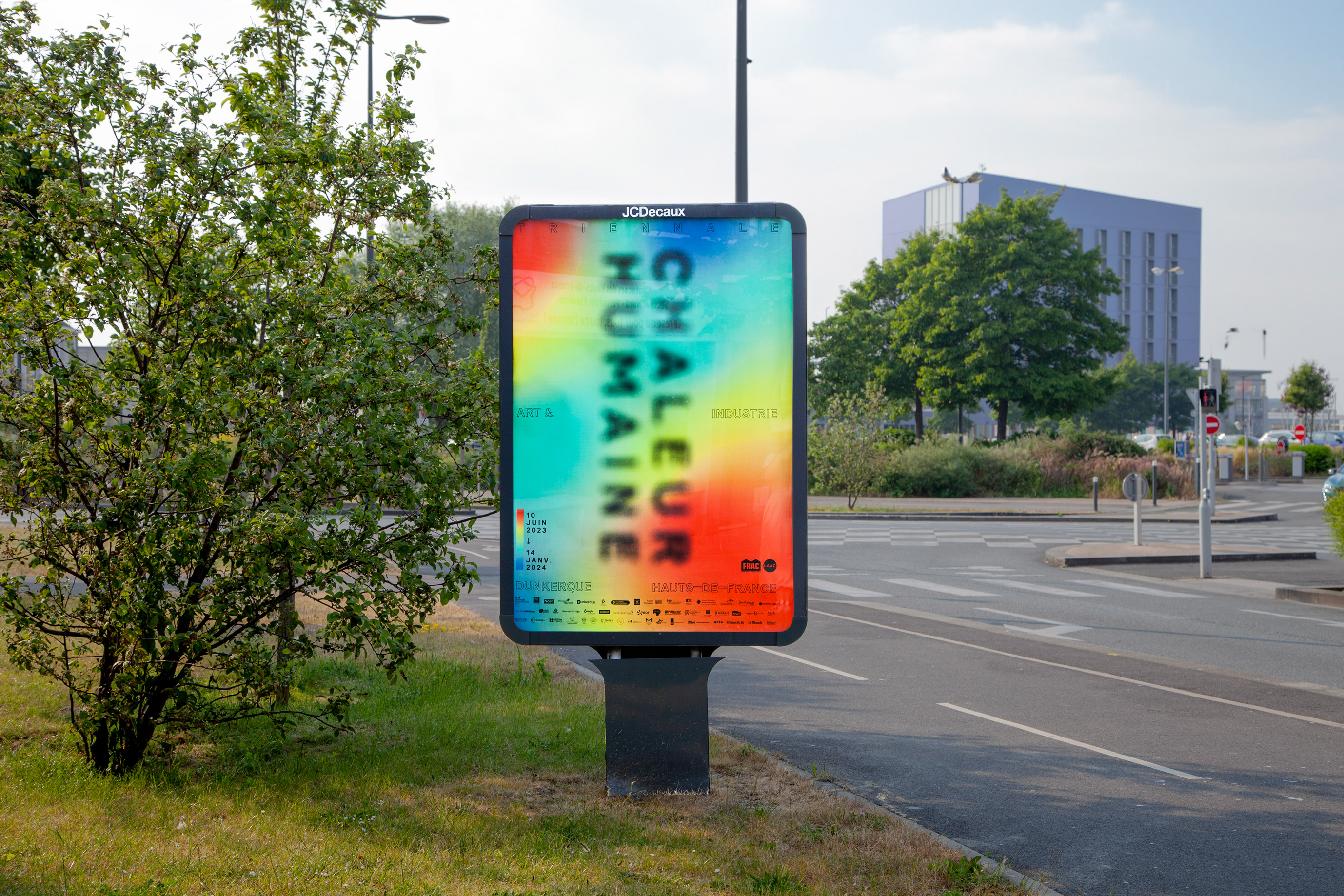
The poster embodies the dialogue between these two identities. The Triennal’s identity is based on a typeface inspired by the industrial history of the northern regions, factory façades, and the modernist heritage of their lettering. It has a strong and assertive regional foothold, coupled with a typographic system that spaces out the words “Triennale Art & Industrie, Dunkerque, Hauts-de-France” to adapt to different formats.
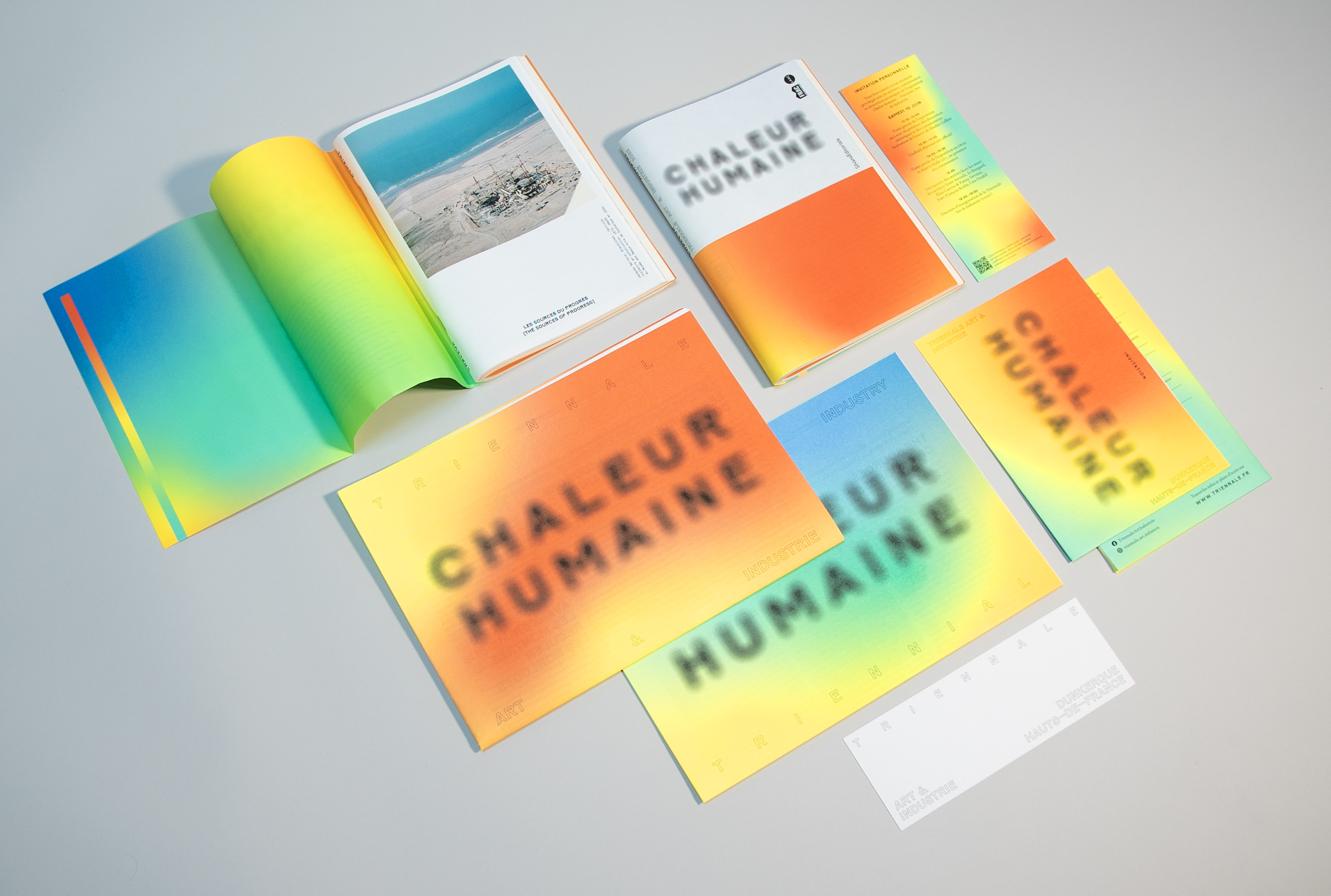
While the Chaleur Humaine curation questions the exploitation of nature and the depletion of energy resources, it has also allowed us to question our responsibilities as graphic designers. How can we make the environmental issues of our time tangible through design practice and encourage reflection on our modes of production and transmission? How can we share them and make them legible in order to influence the general public beyond the limits of a visual identity?
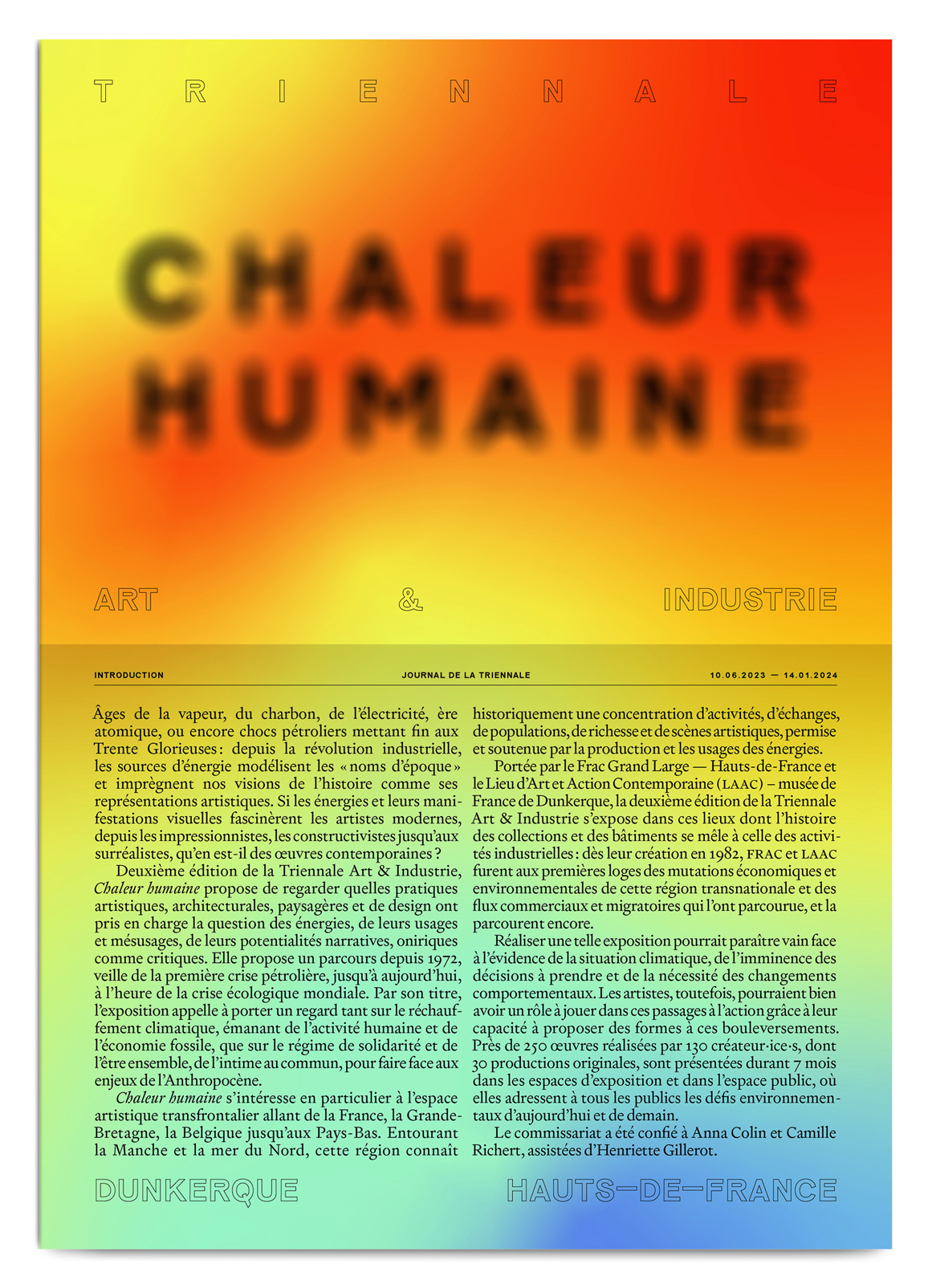
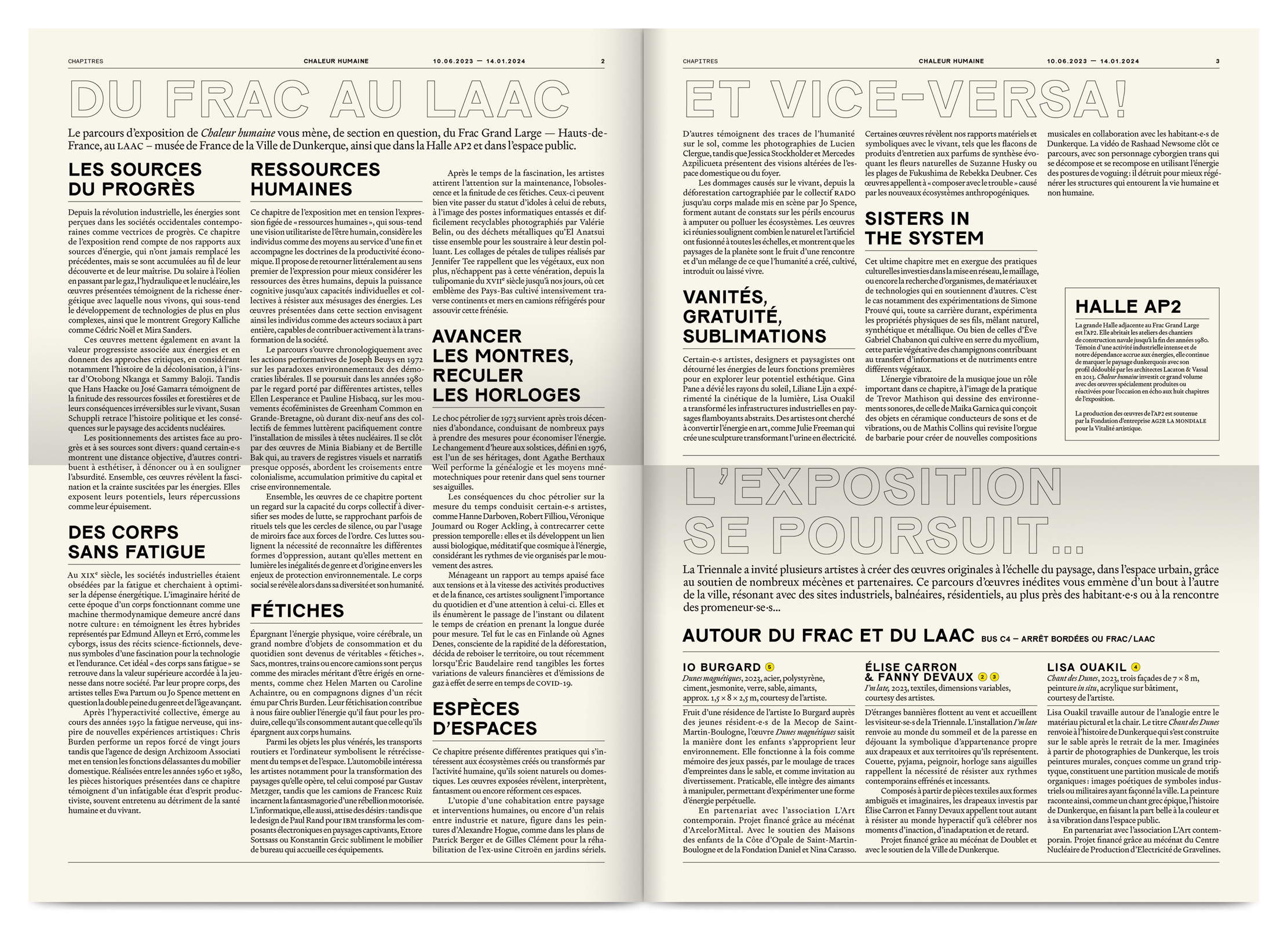
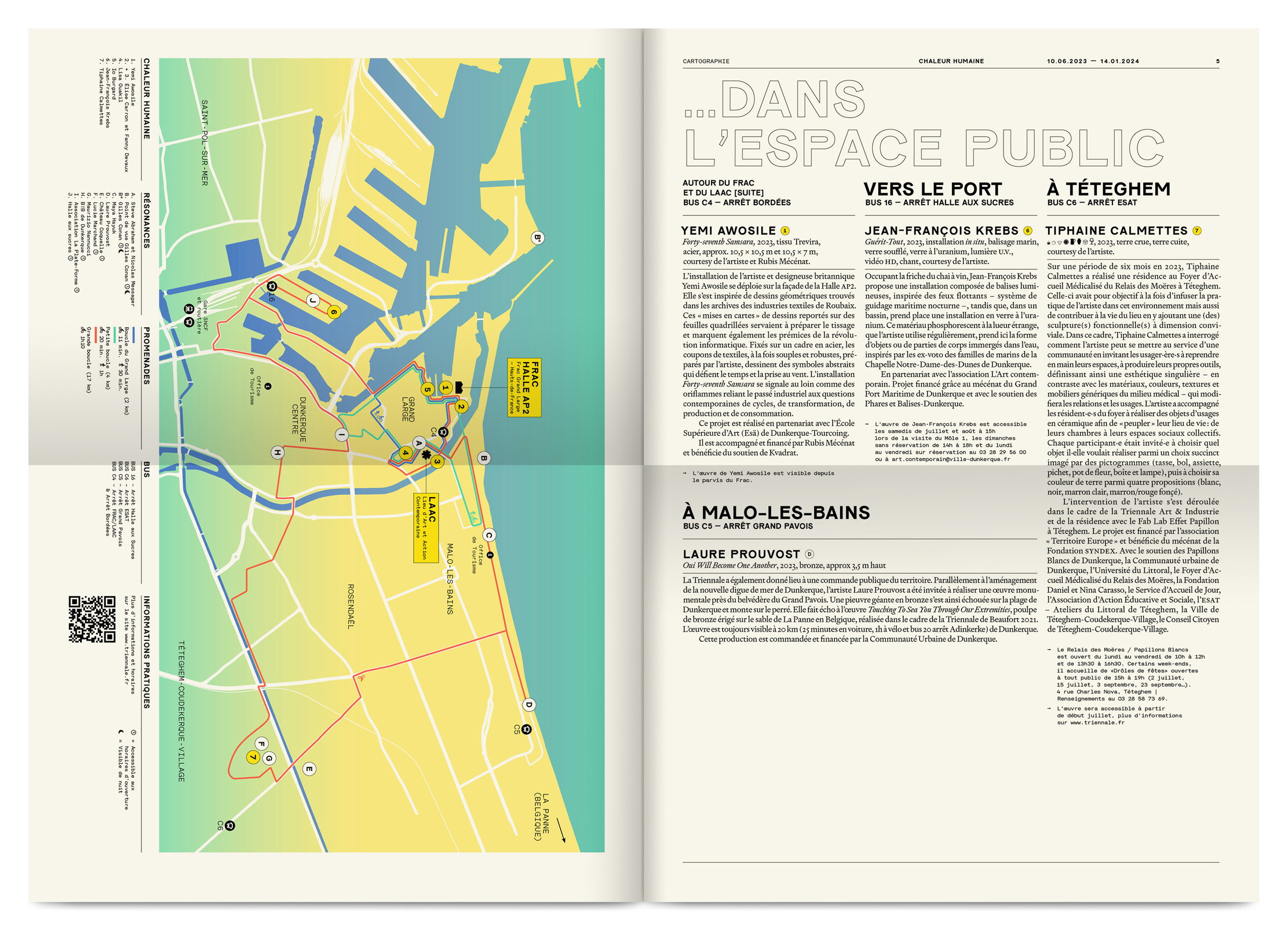
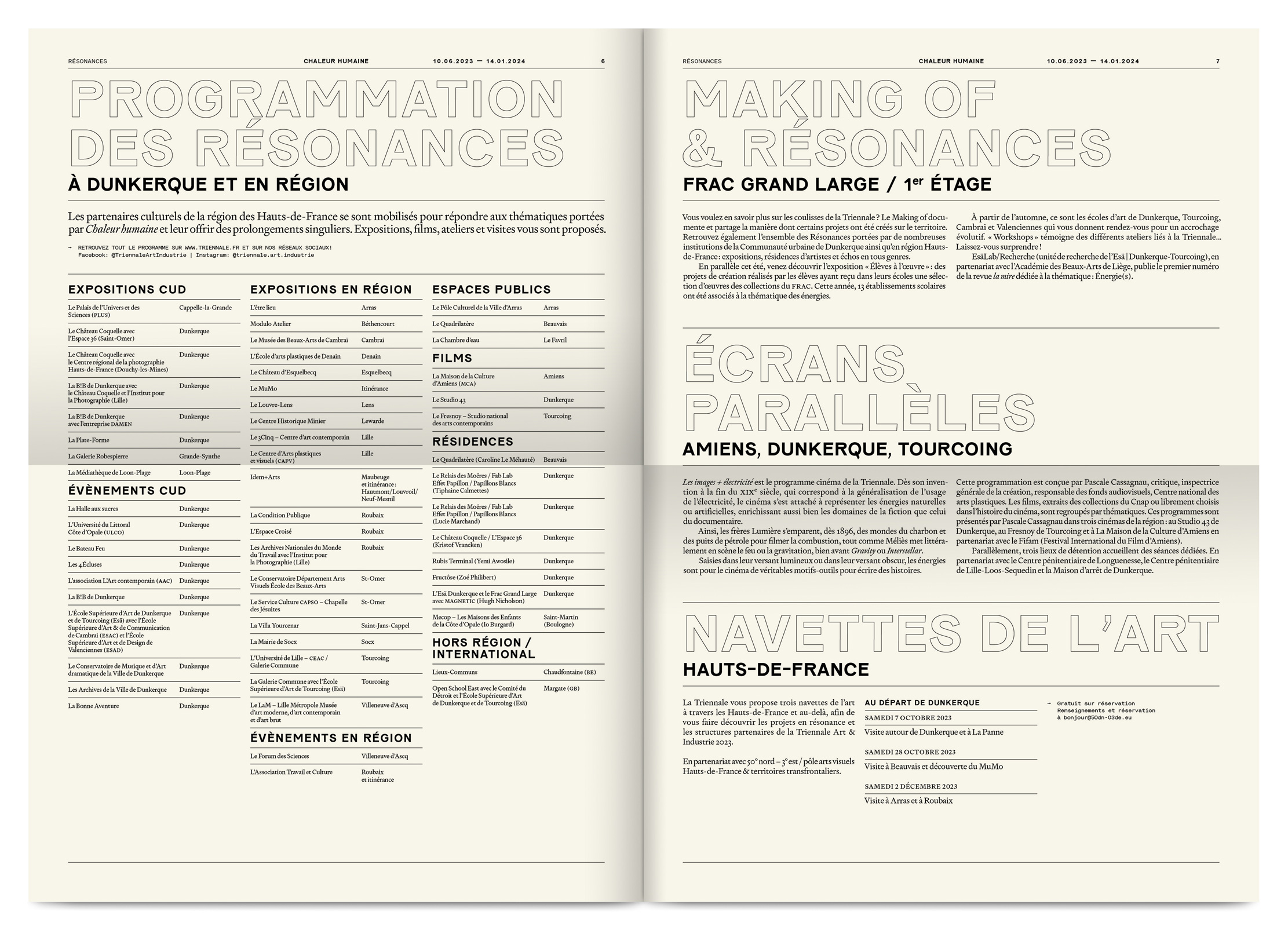
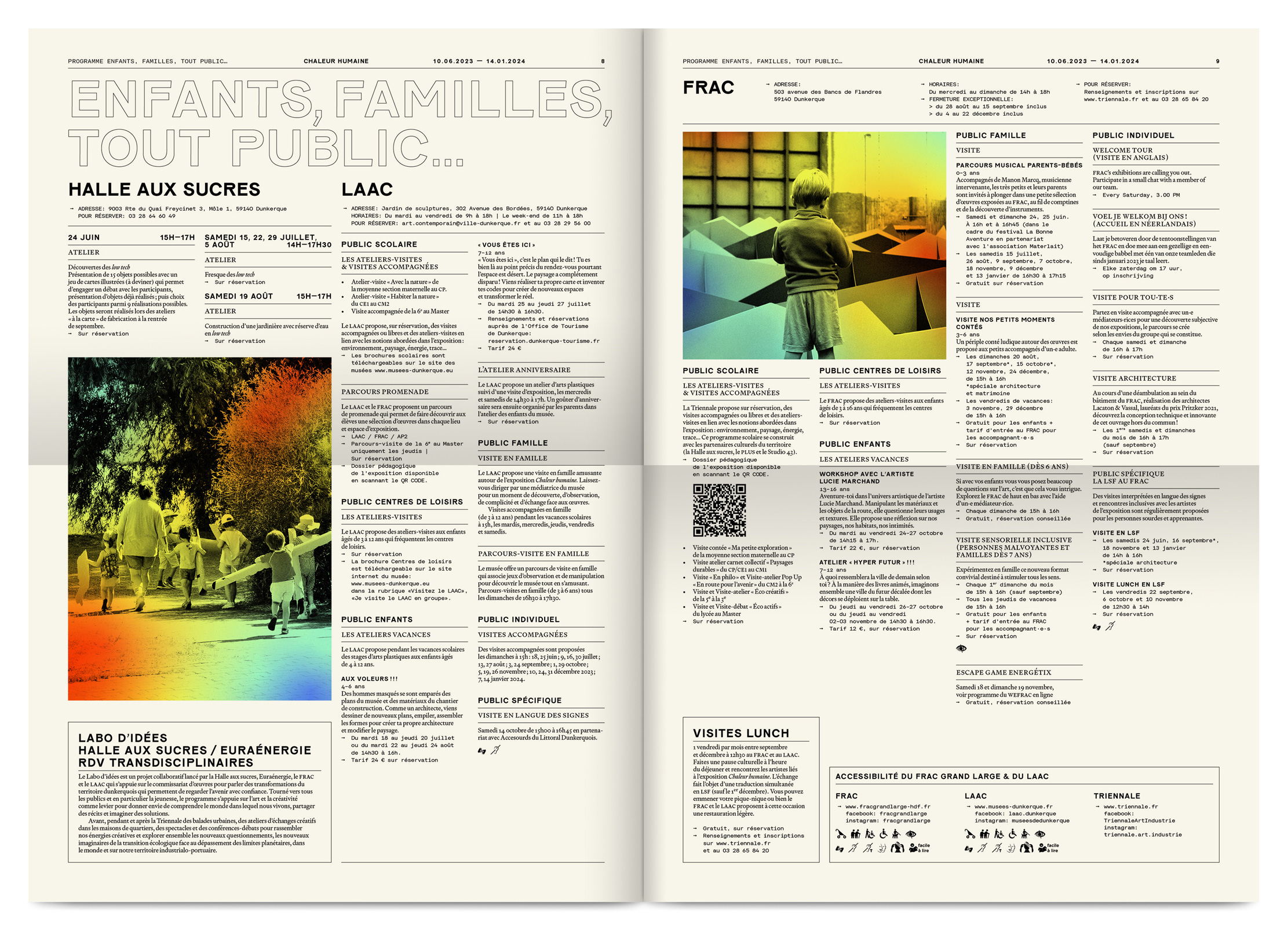
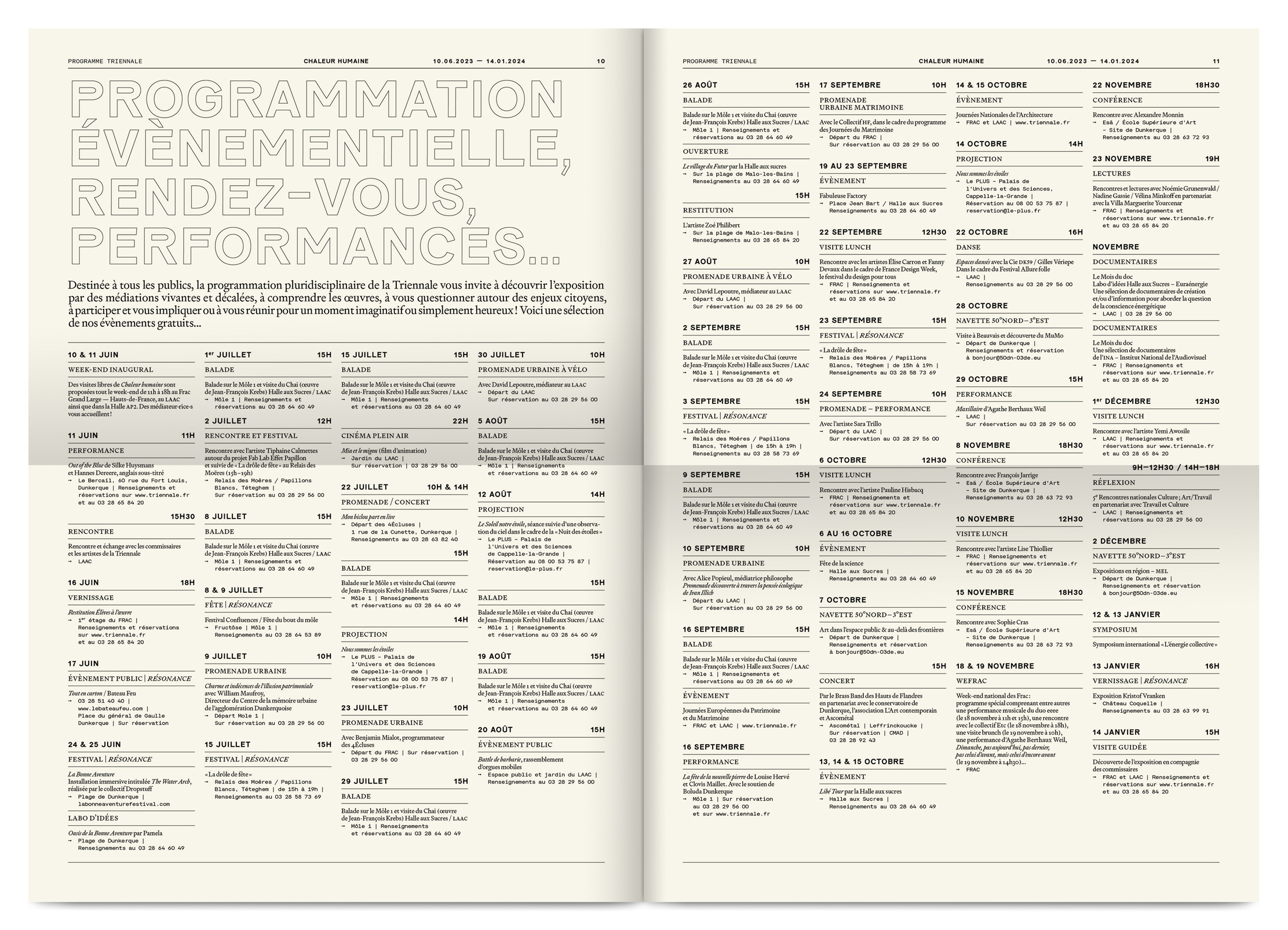
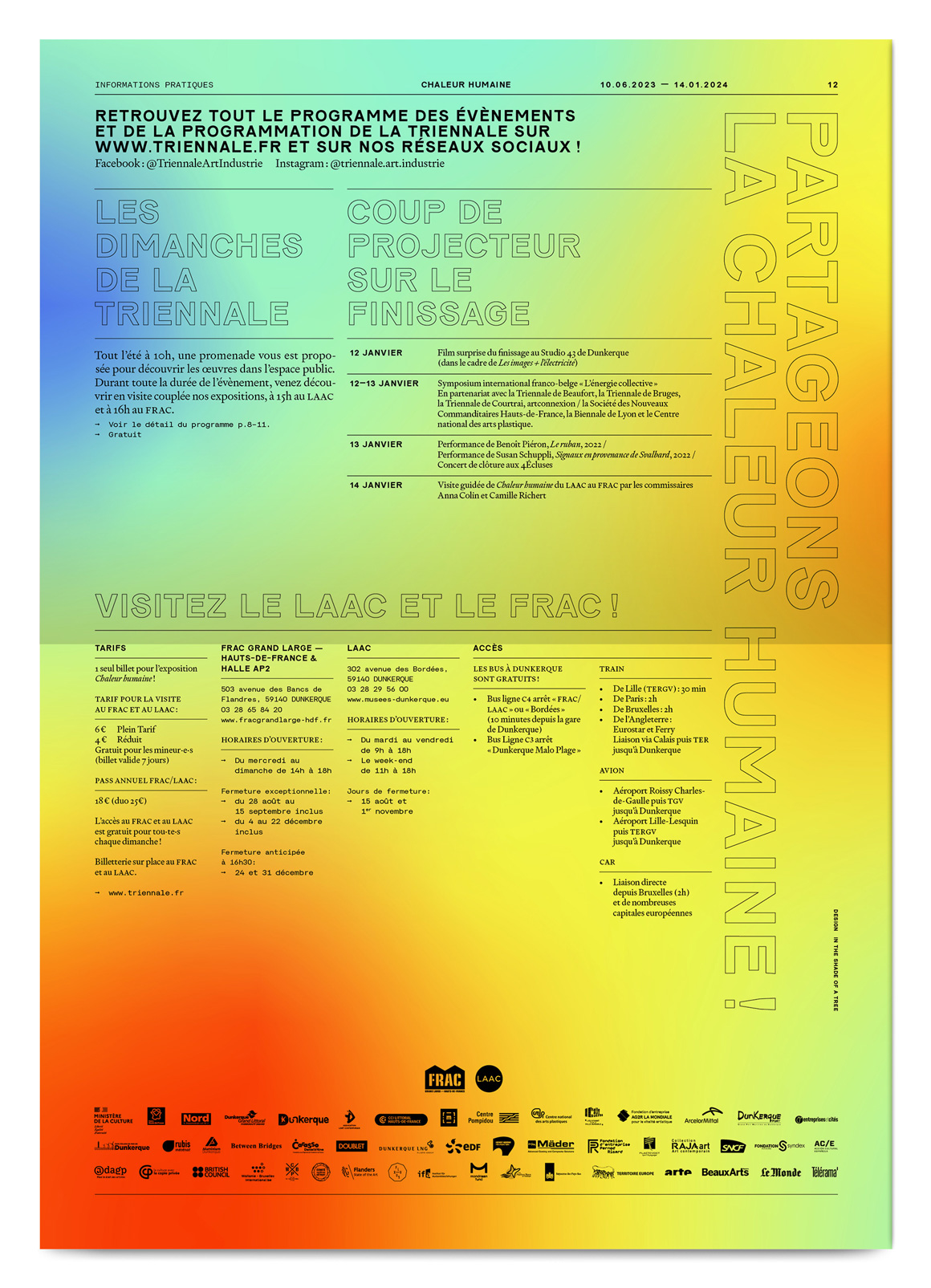


The representation of the climate and its fluctuations is the visual and conceptual basis of the Chaleur Humaine communication. A visual alteration, reminiscent of global warming, impacts the reading of the words Chaleur Humaine. The letters, clear in winter, gradually dissipate until the opening of the Triennial in summer: they correspond to the evolution of temperatures. The chromatic range of the poster’s background is freely inspired by thermographic representations of the Dunkirk region. It evolves according to the seasons and temperatures. Therefore, the communication received in January will be different from one received in June for the opening of the Triennial.
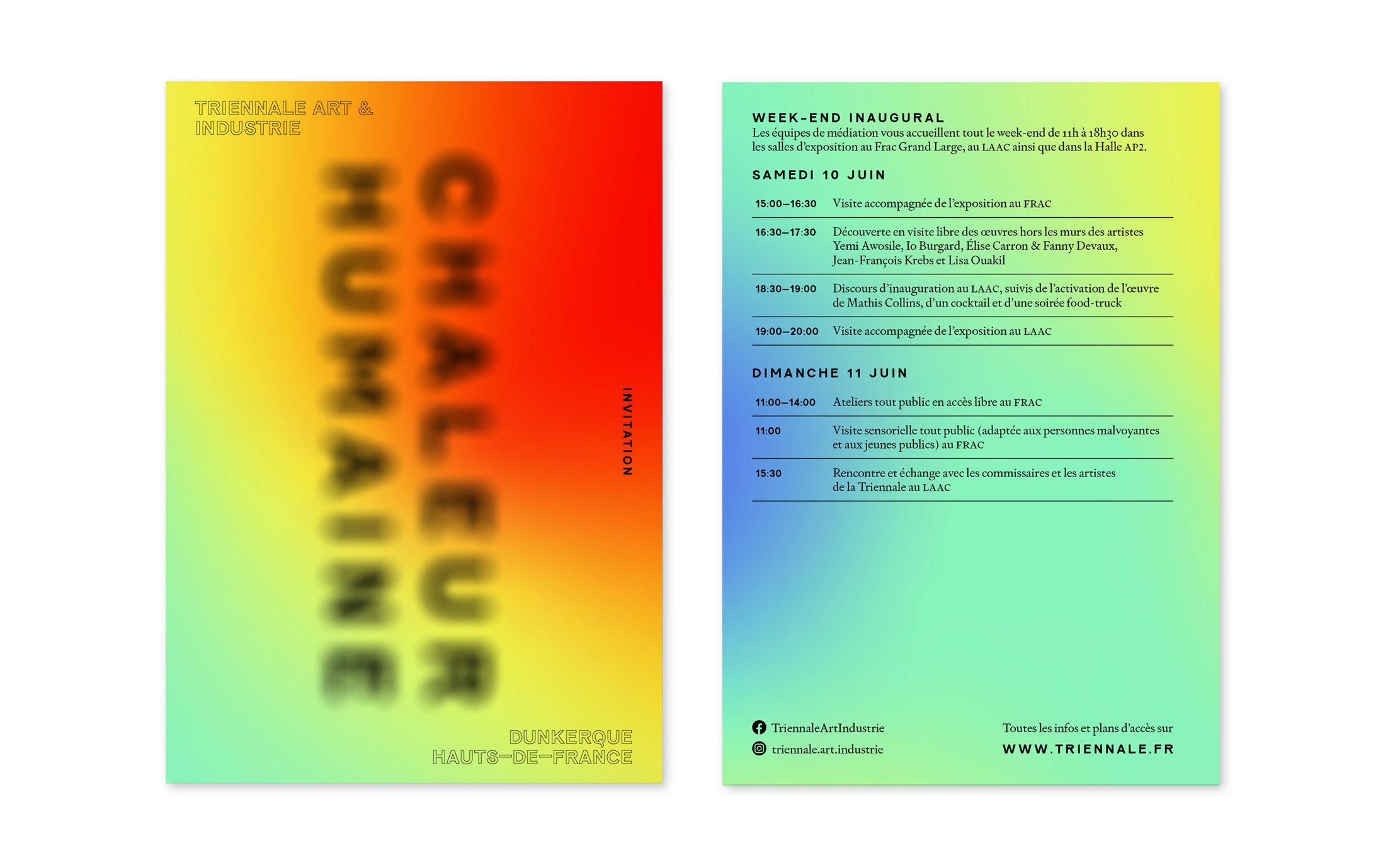
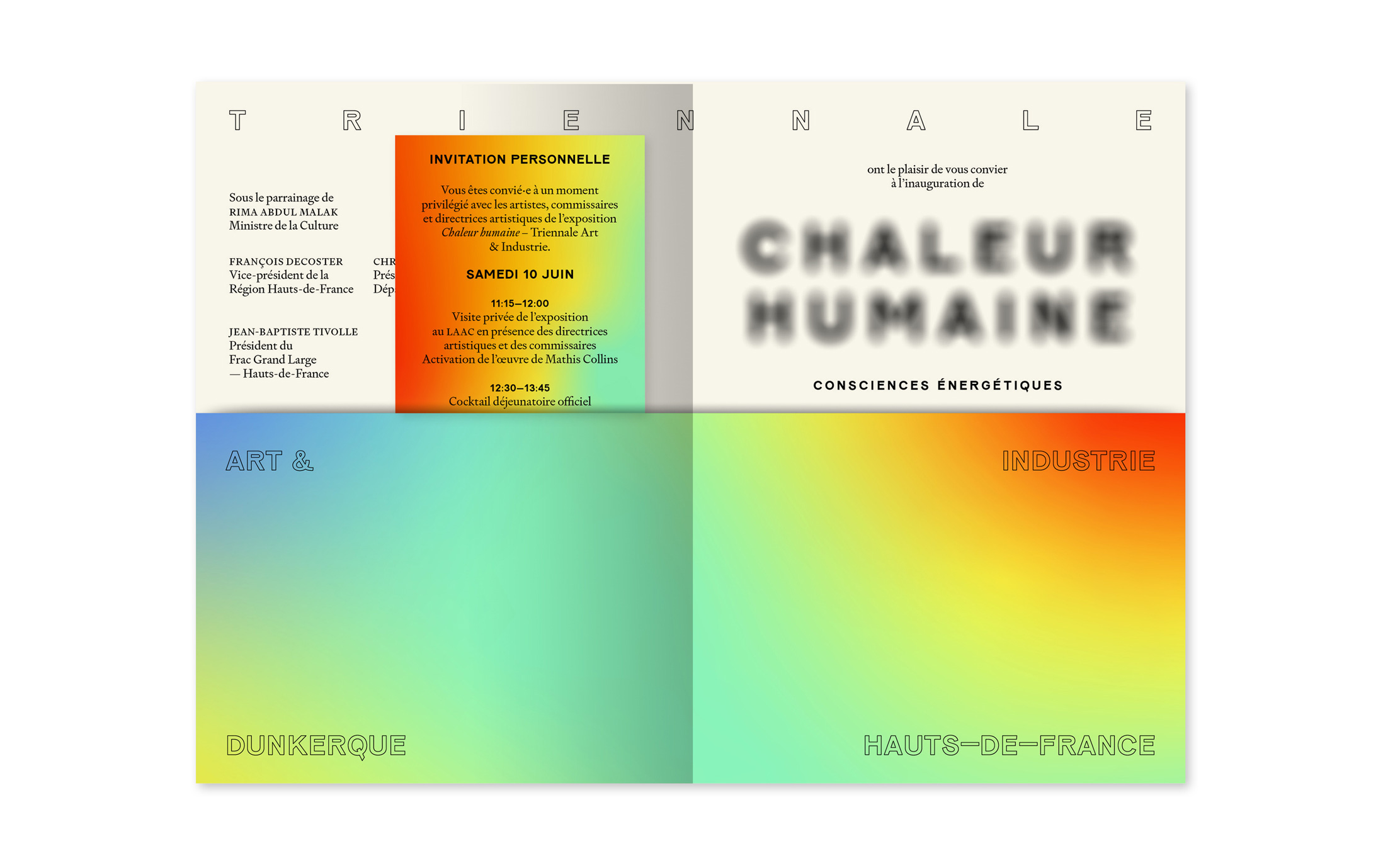
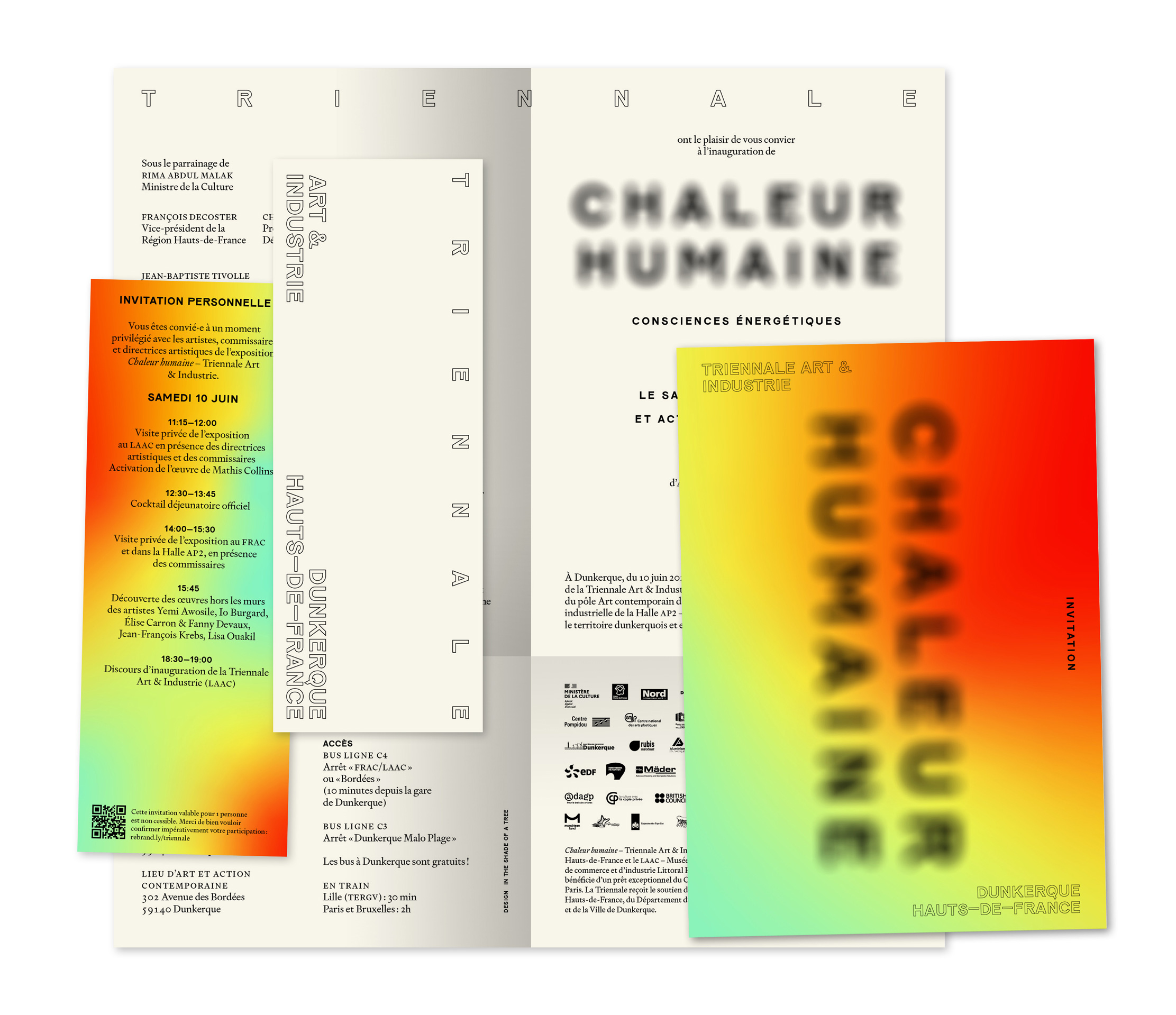

These questions about ecology and energy consumption are explored in greater depth and extended through other communication media. The website, for example, encourages users to take responsibility for their browsing by choosing different levels of energy consumption. The exhibition catalogue also reflects on the use of resources (optimisation of format, origin of paper, glue-free binding) through its structure and manufacturing.
Chaleur Humaine
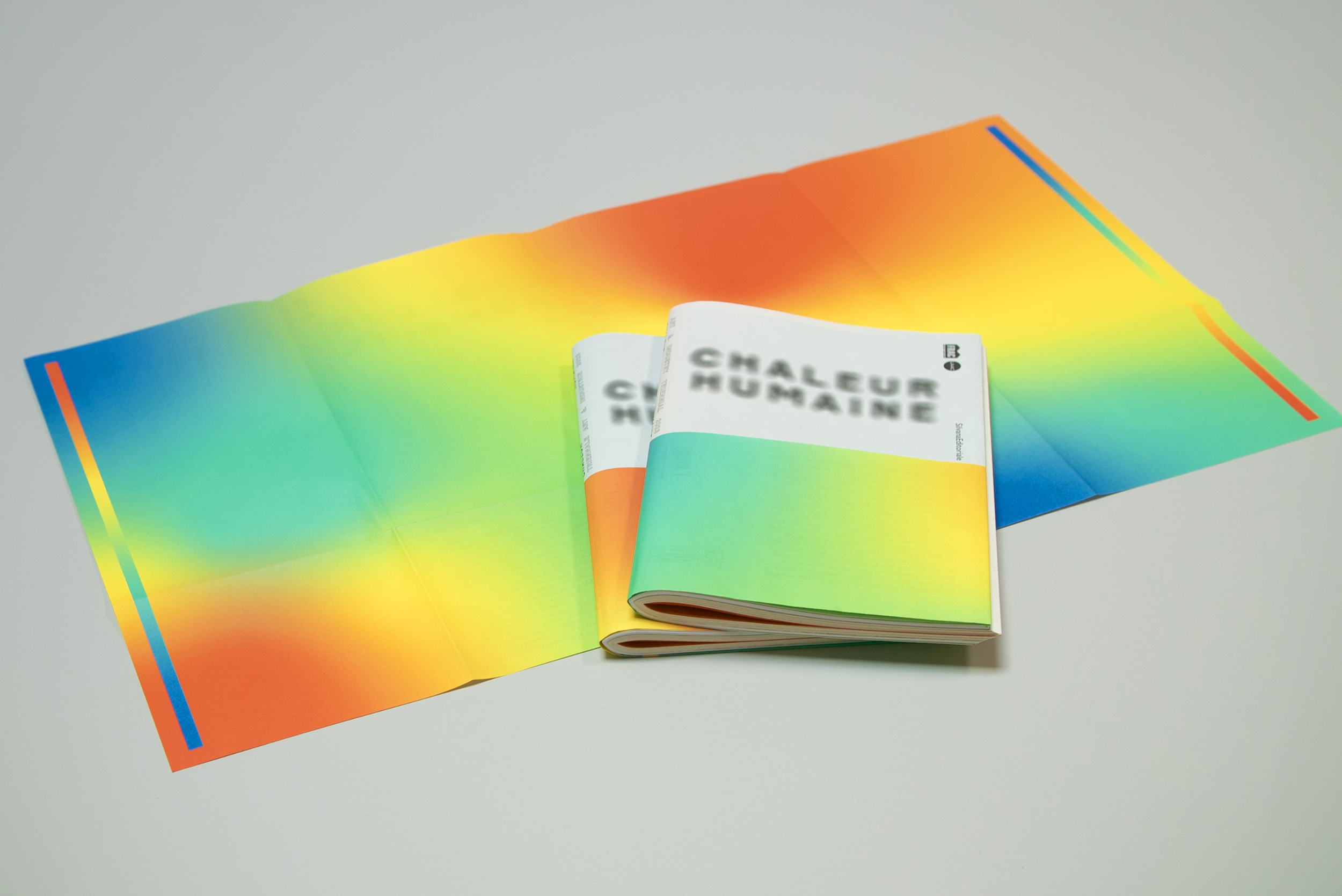
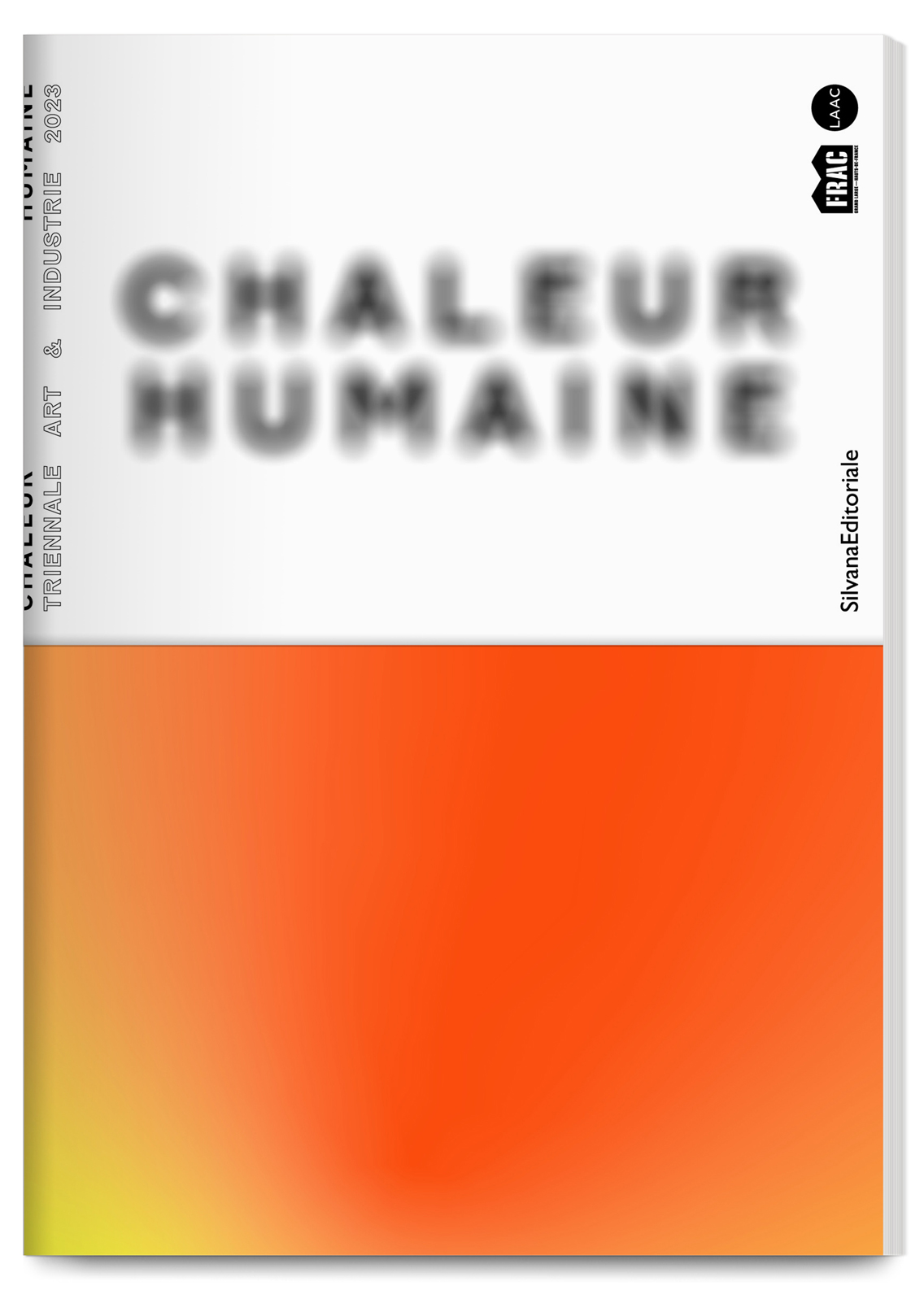
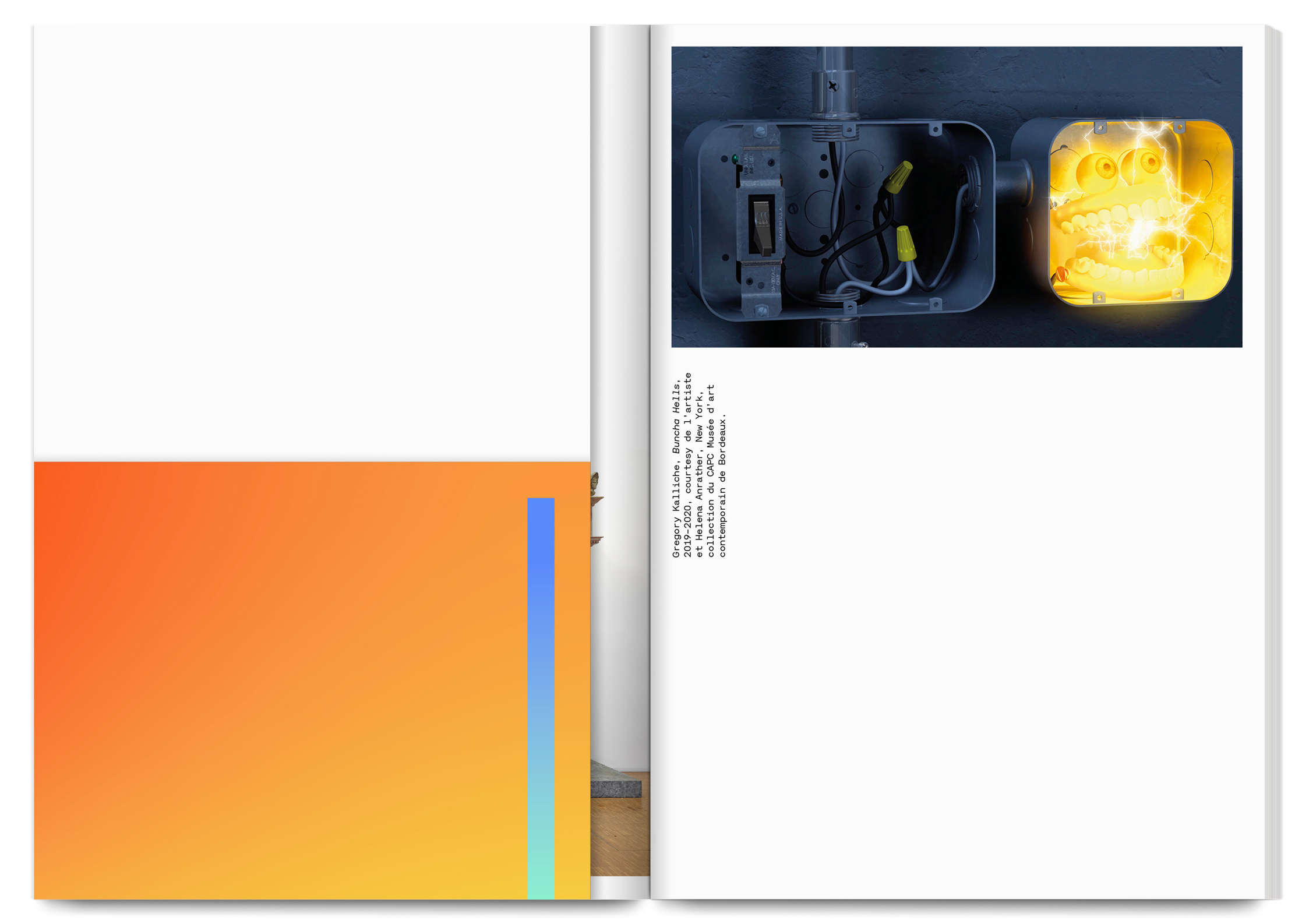
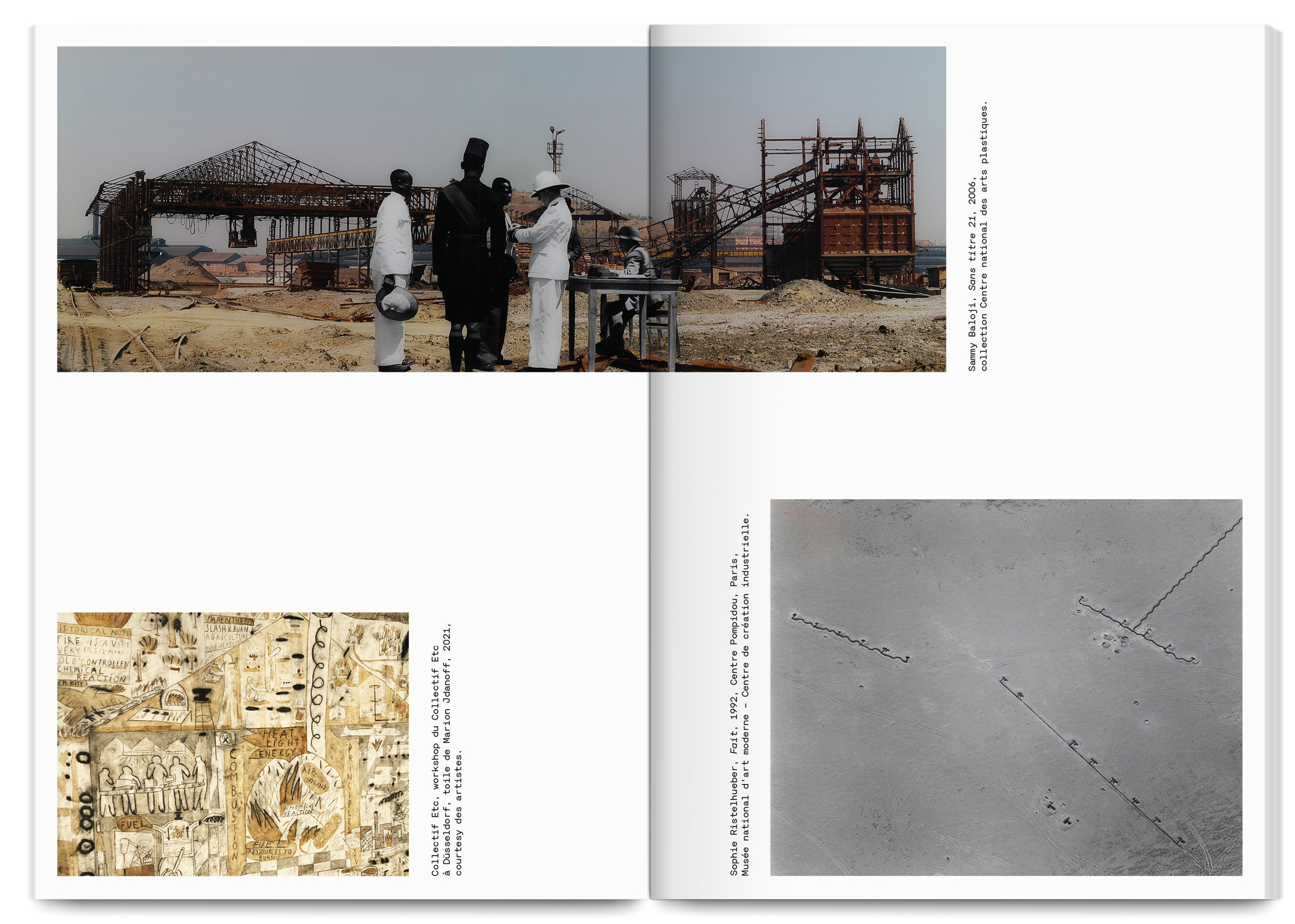
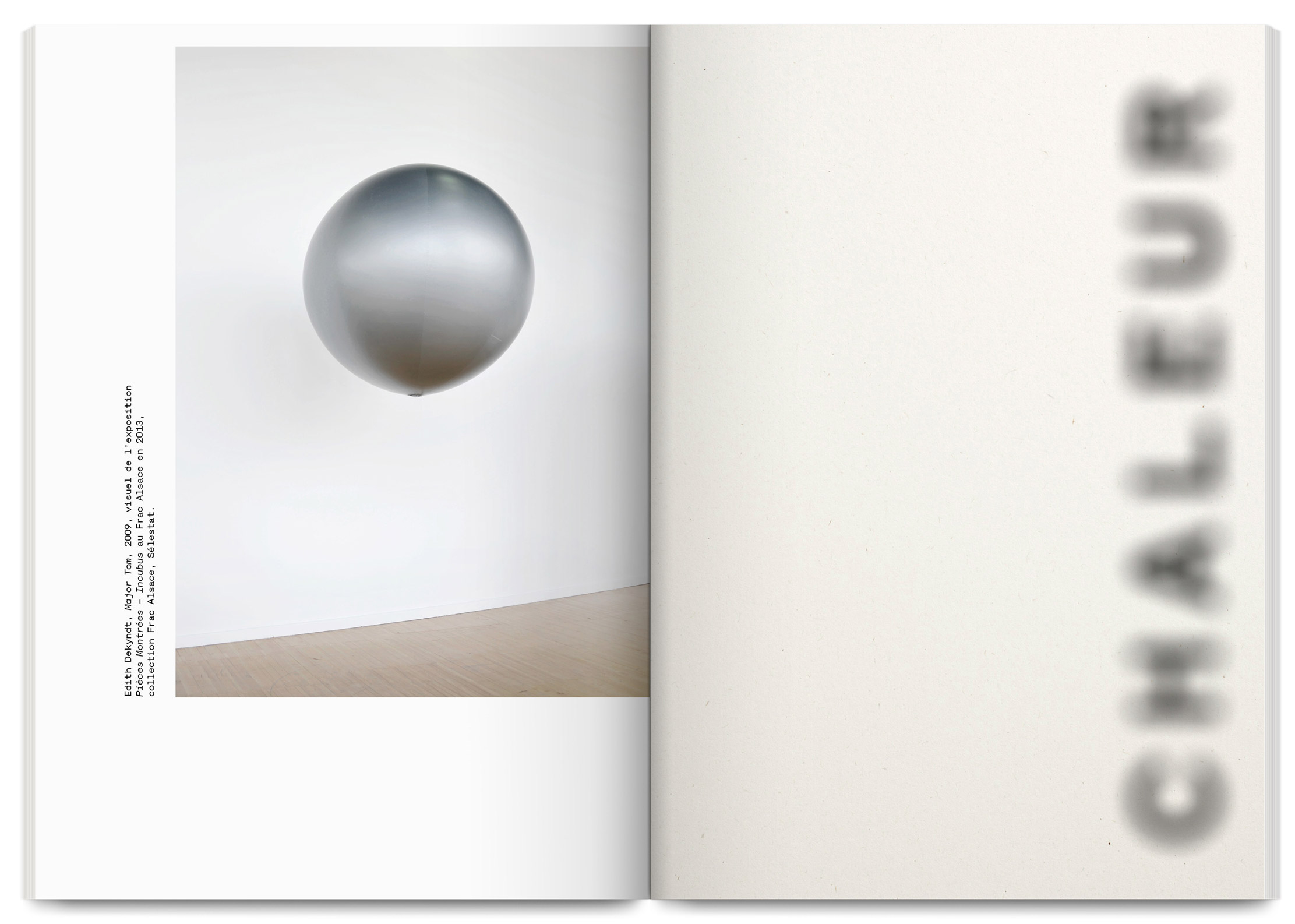
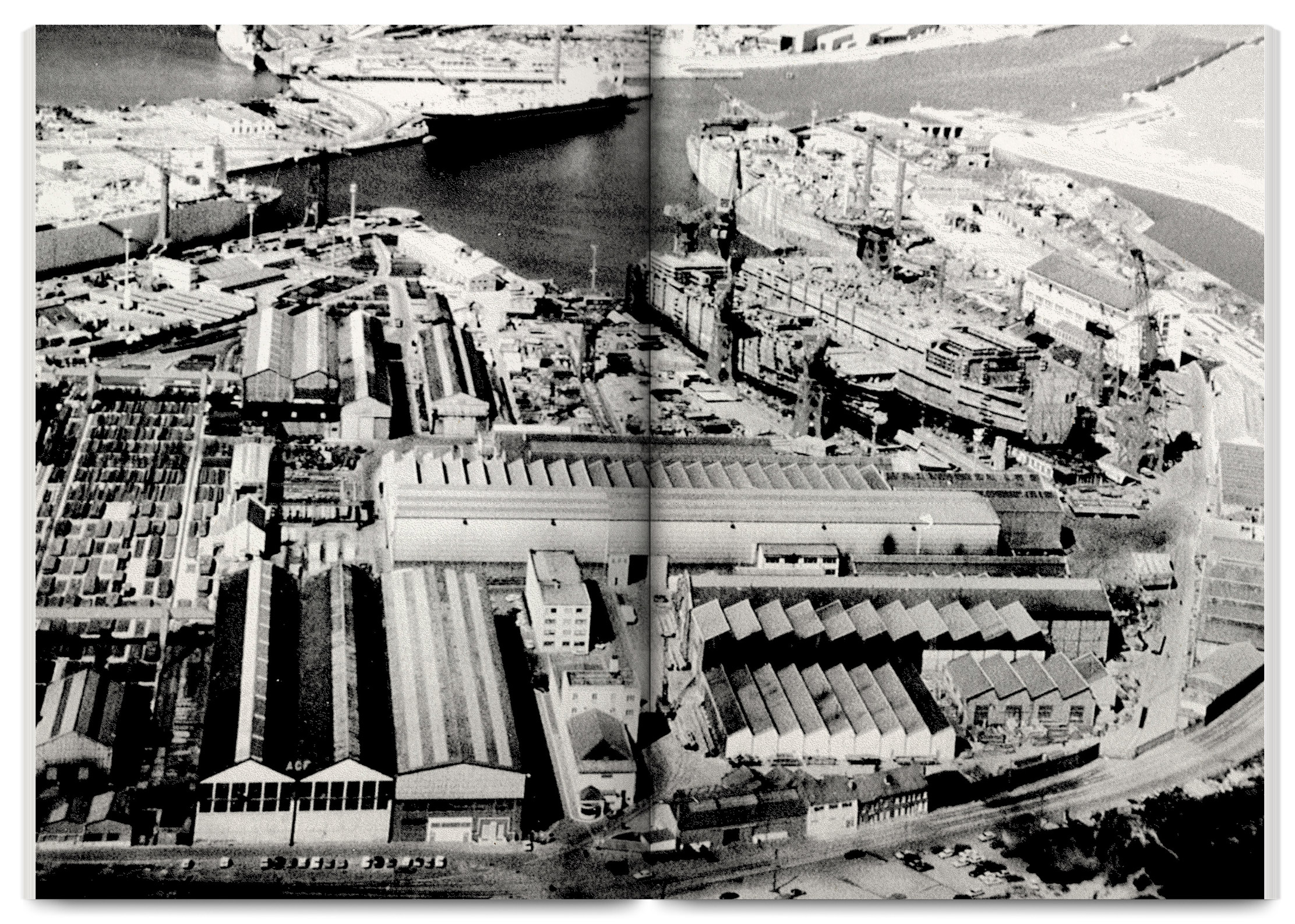
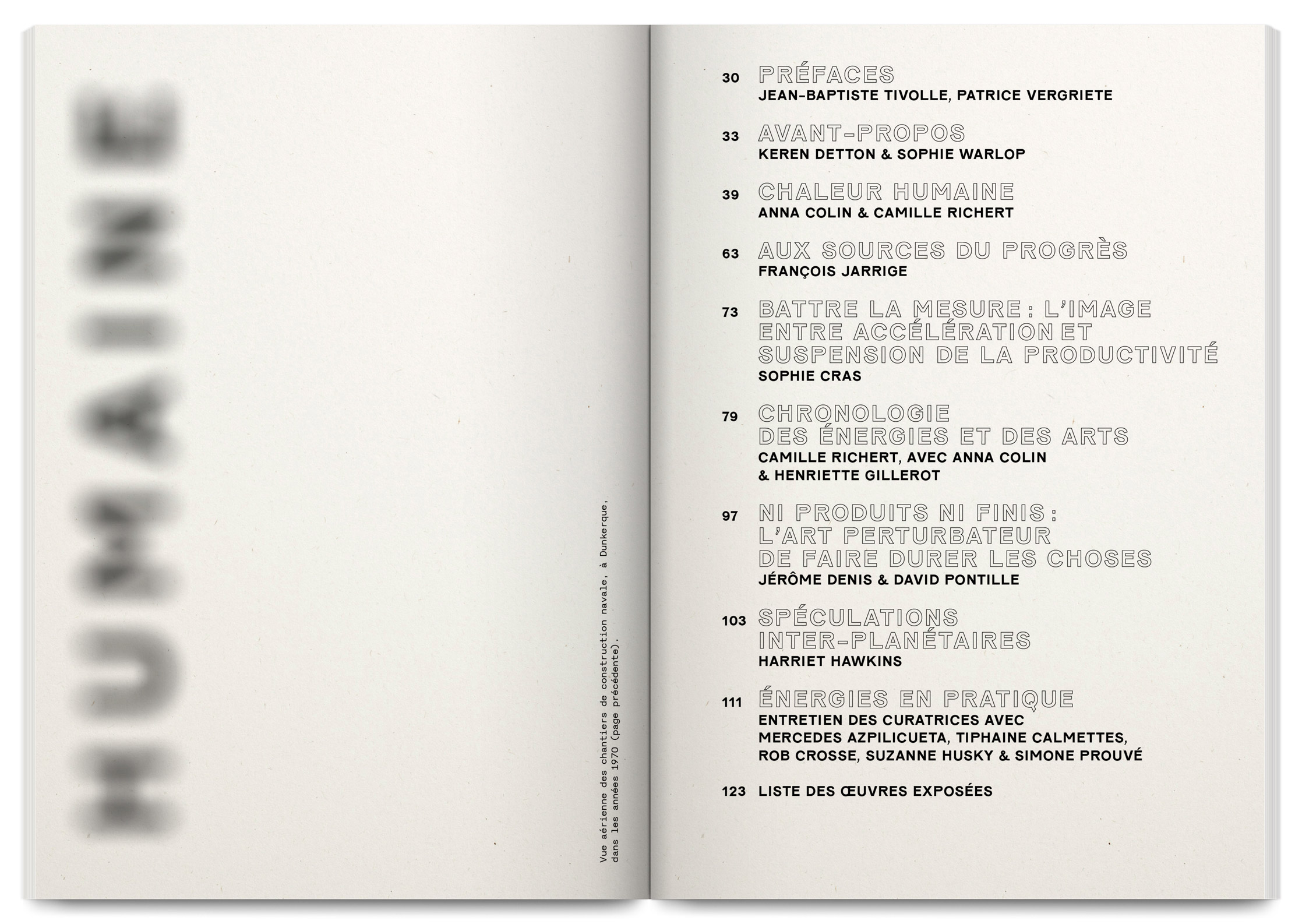
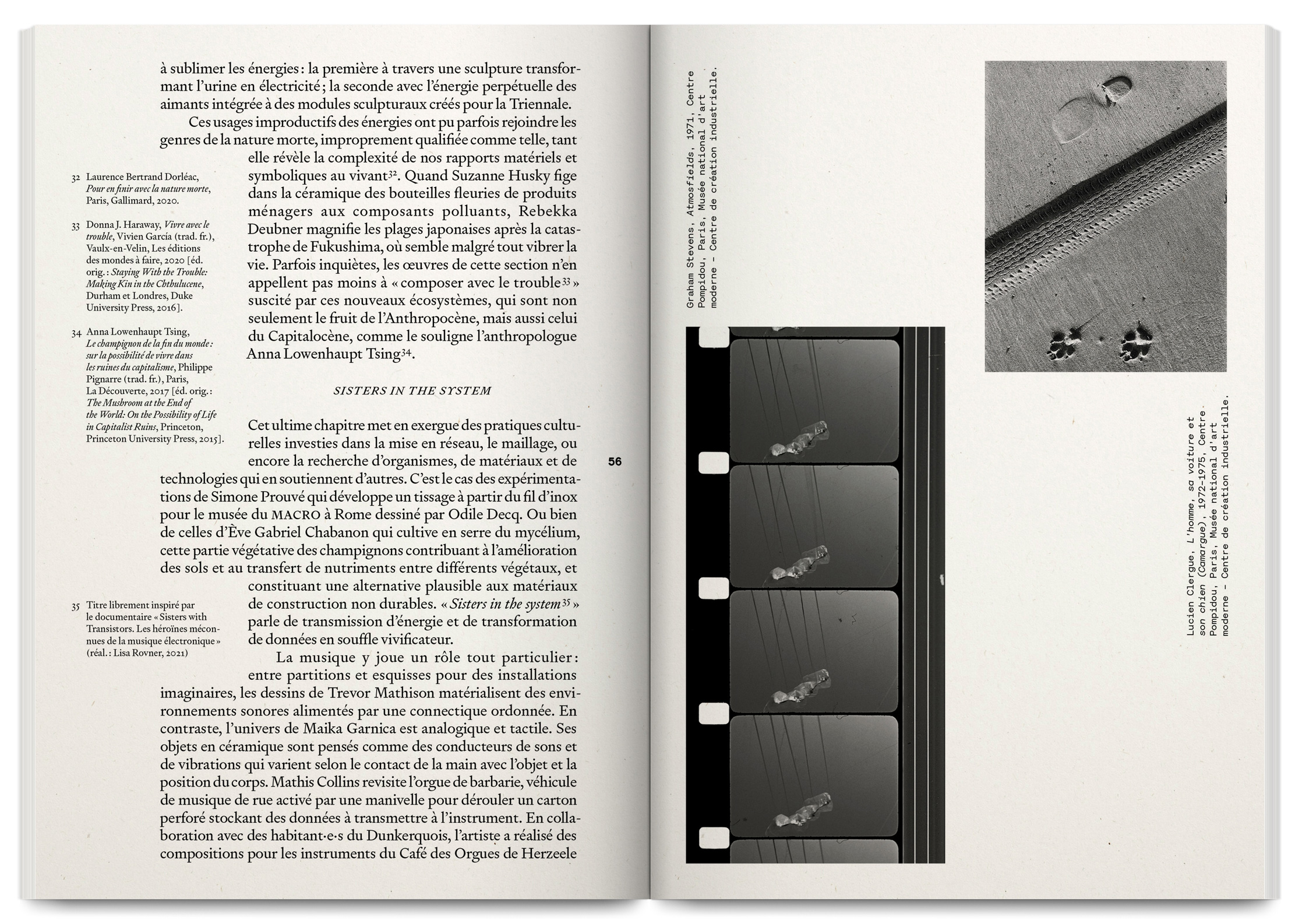
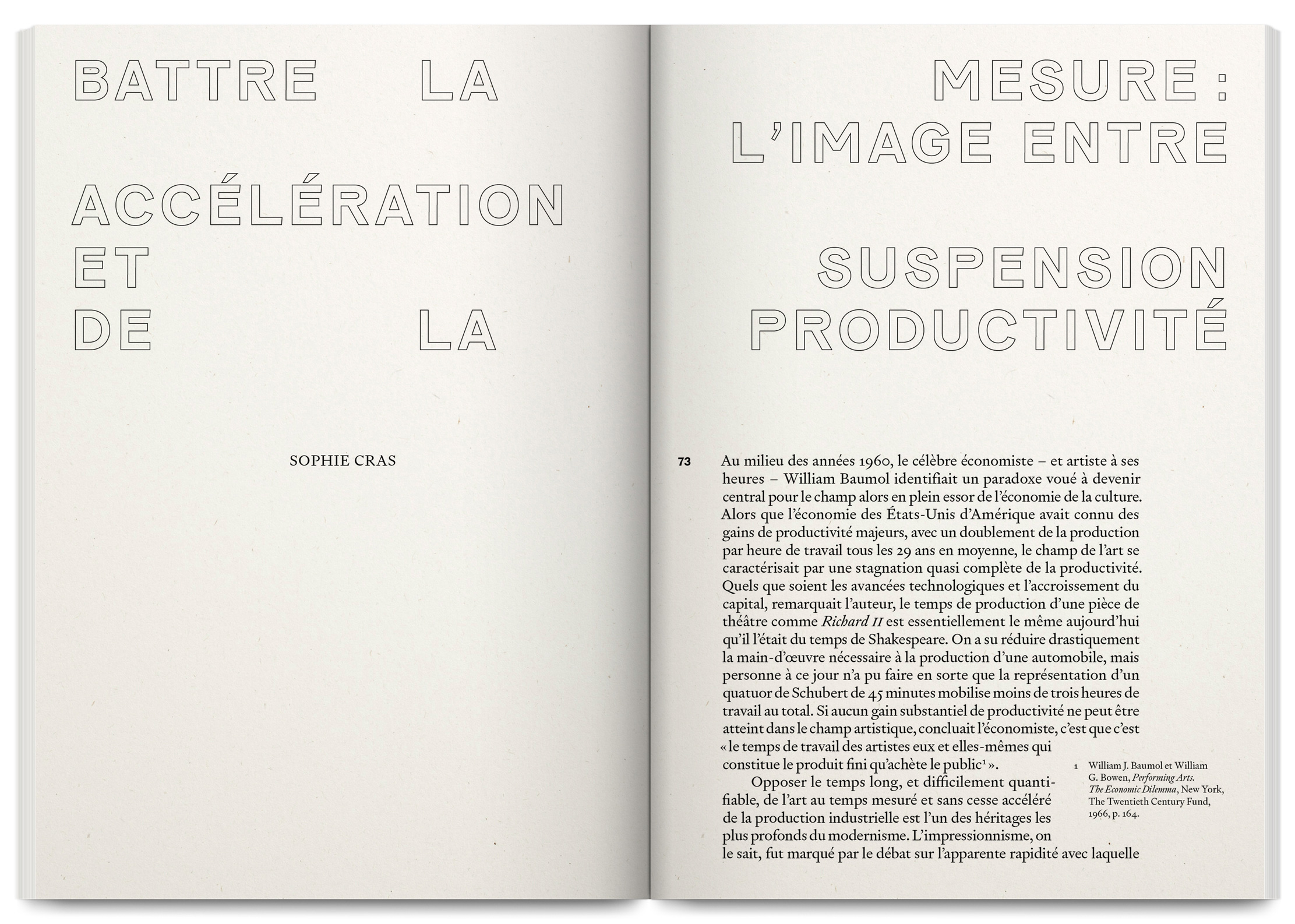
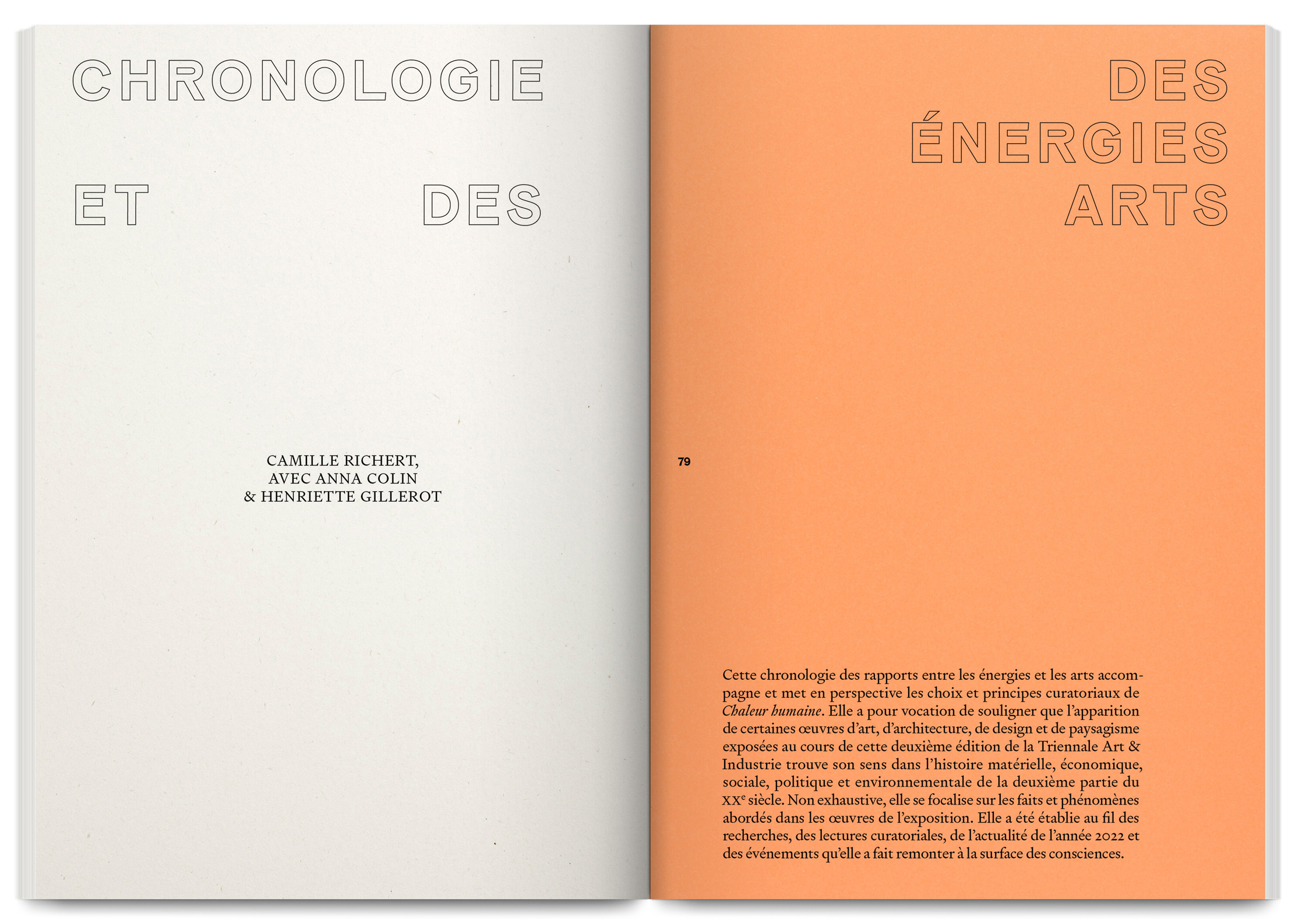
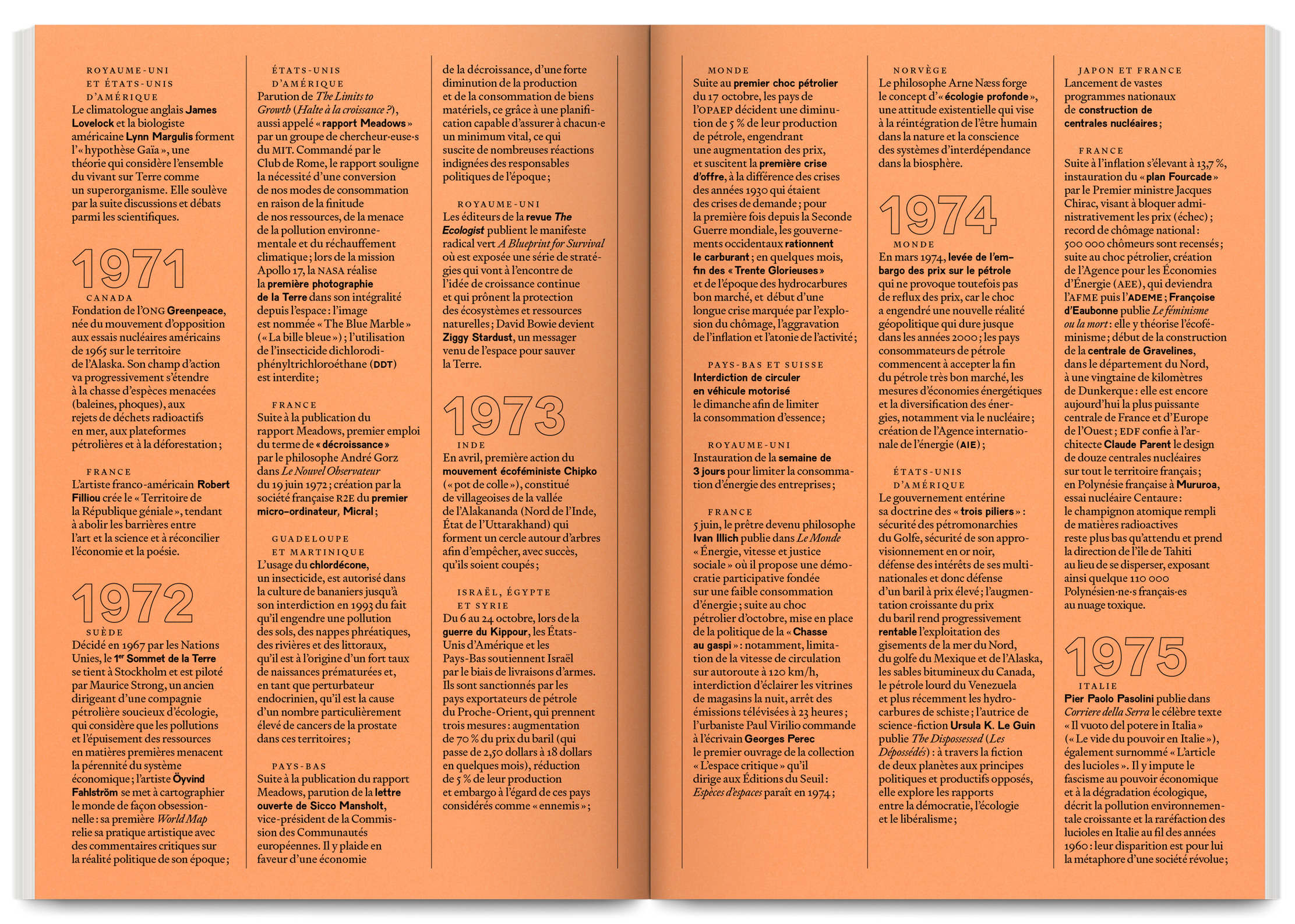
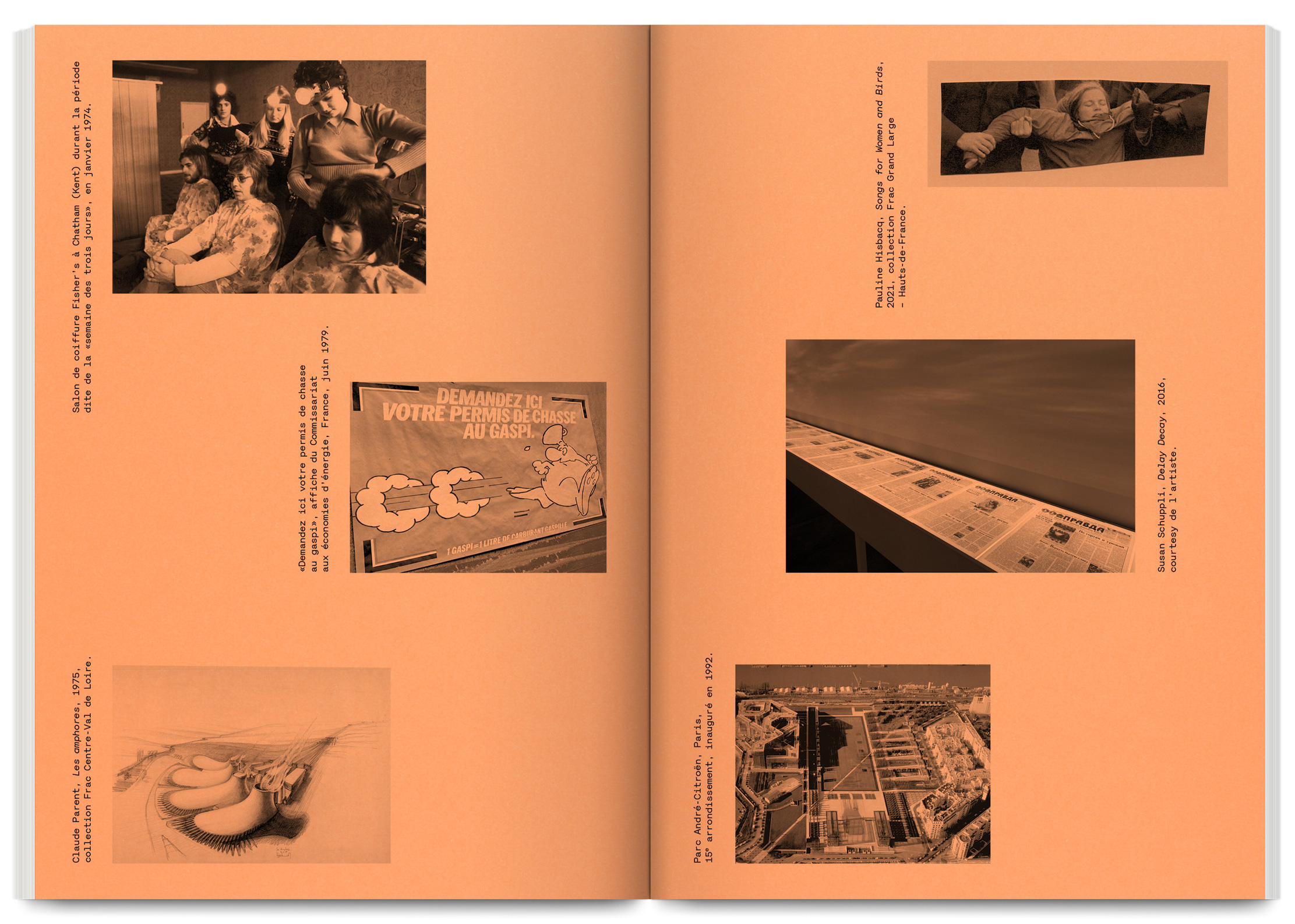
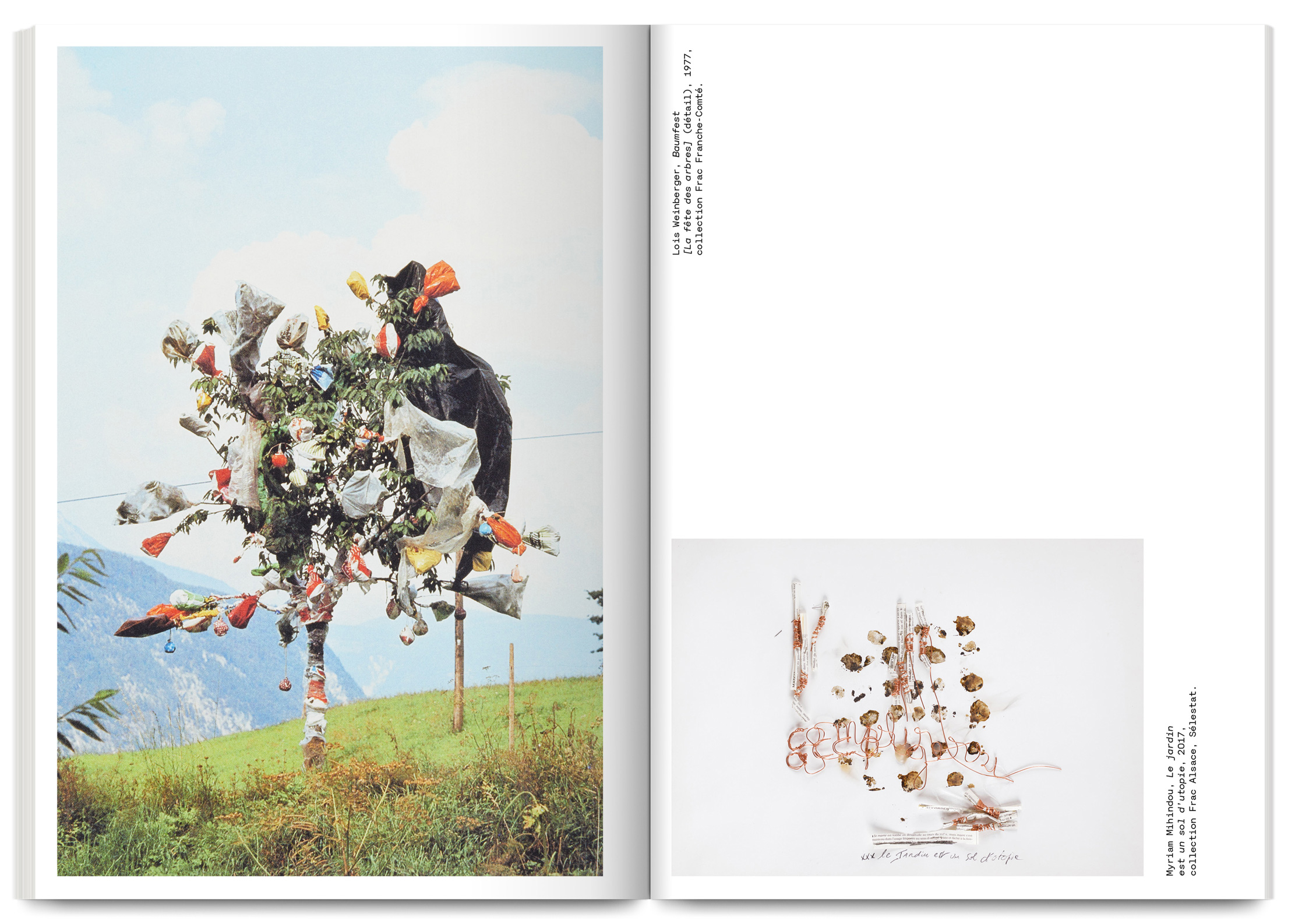
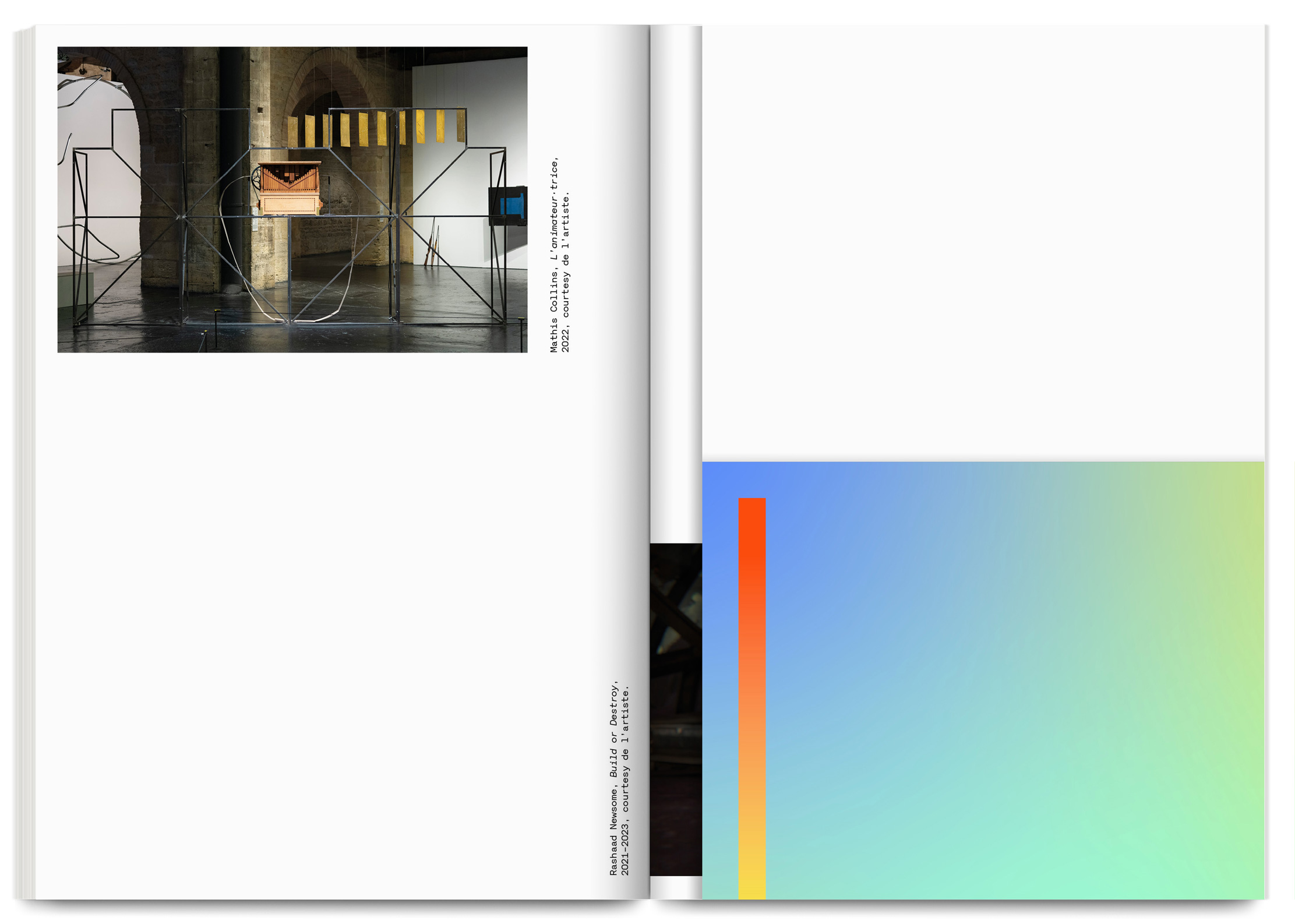
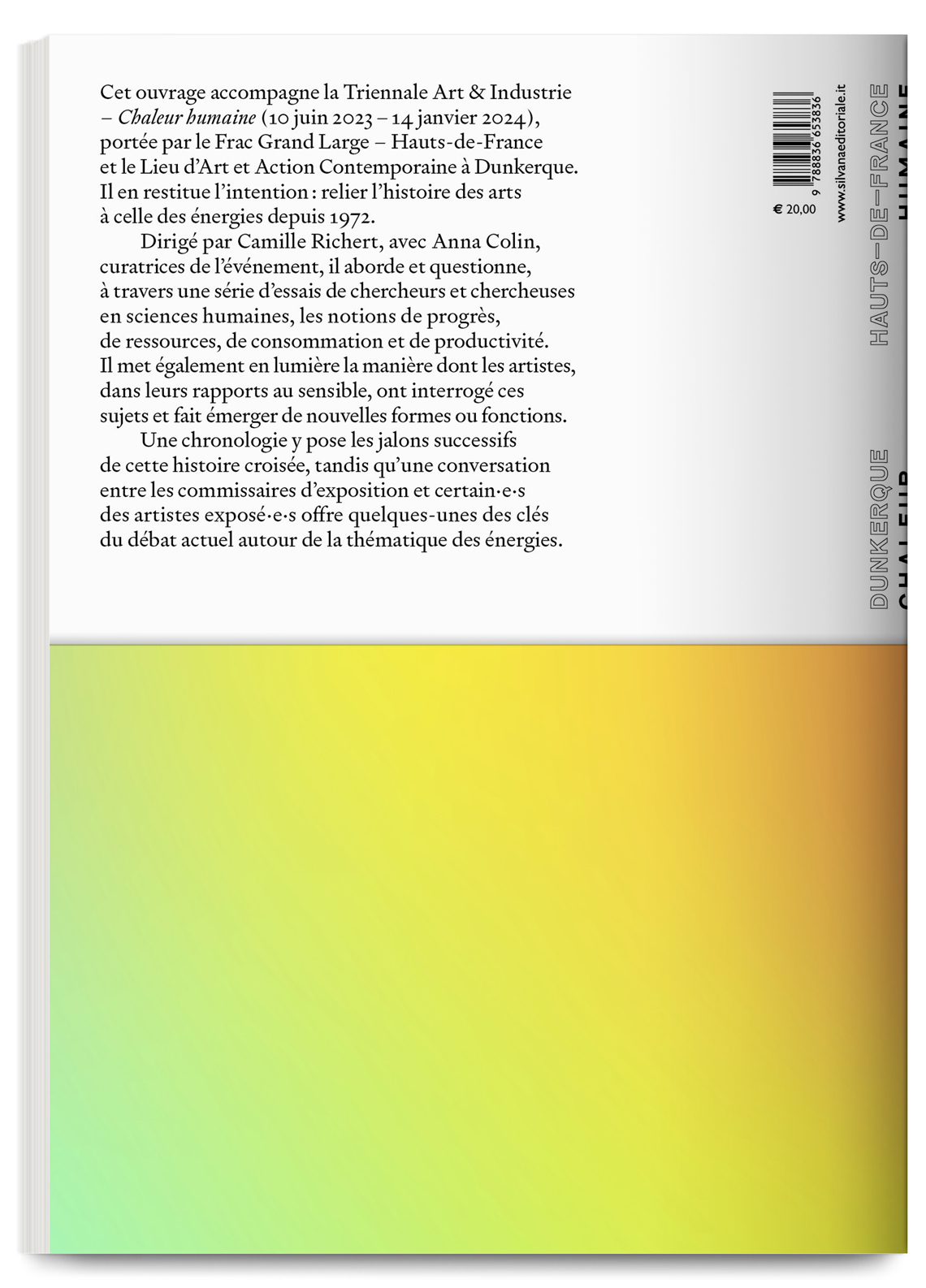
The catalogue Chaleur Humaine is published in both a French and an English edition at the start of the Triennial (and therefore without exhibition views). It is not intended to document the exhibition itself, but rather to provide an opportunity to explore the concepts that have nourished the research and imagination of the exhibition’s artists. The printed catalogue offers a reflection on the use of resources through both its structure and making. Considerations about production tools, cost rationale and materials (format optimisation, paper origin, glue-free binding, untrimmed edges) have guided all design choices to create a manifest object that embodies the Triennial’s ambitions.
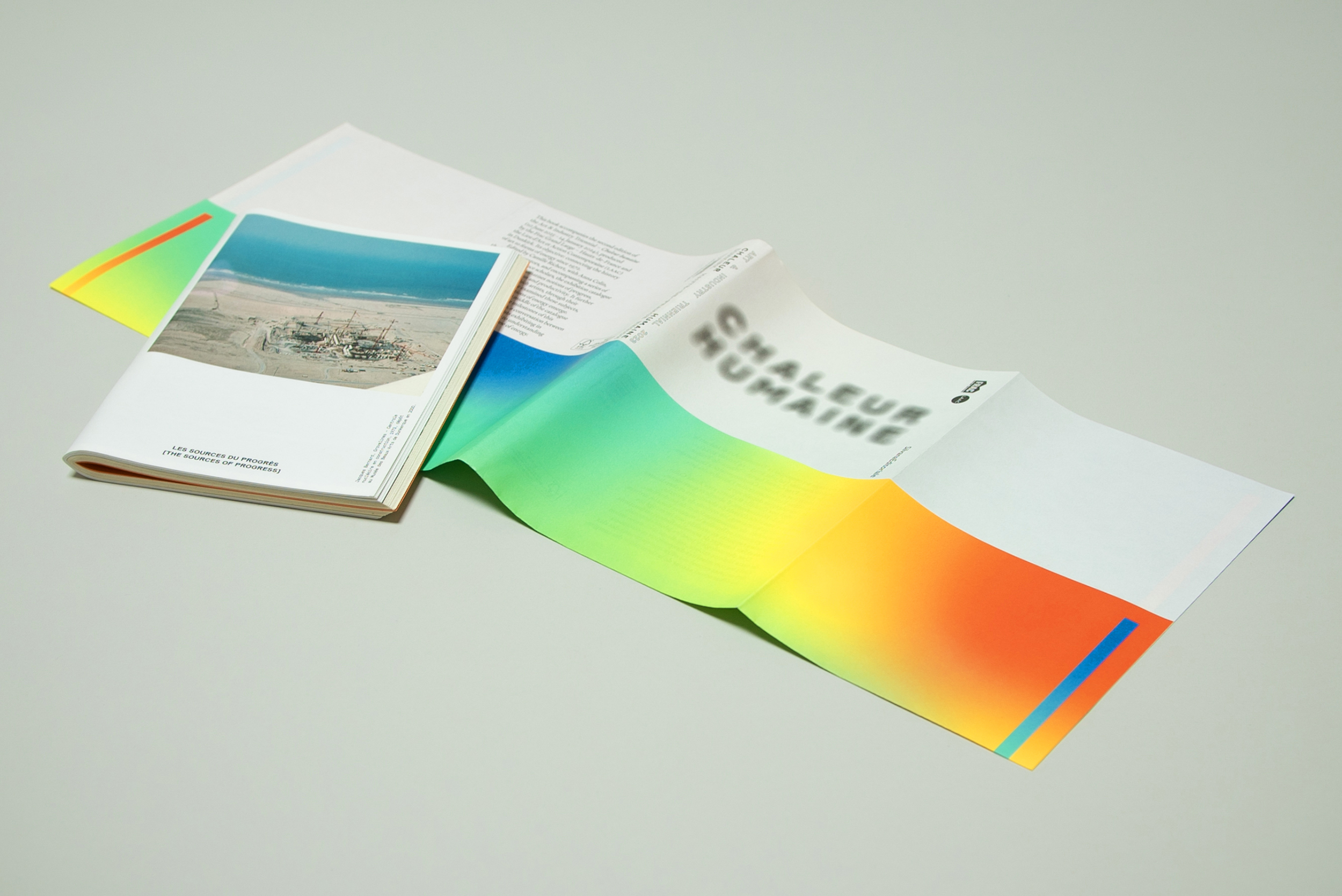
The catalogue is designed as a reflection on the production of a printed work, emphasising economy and ecology in scale. Its 17x24.2cm format maximises paper use, creating a 32-page signature from a single sheet. One catalogue is therefore made of 6 sheets of 70x100 cm, without any paper waste. The uncut edges of the book highlight this concept. Sheets are inserted into each other and stapled without glue, facilitating recycling. To optimise production processes, colour printing is dedicated to only bilingual signature showcasing the artists’ work.
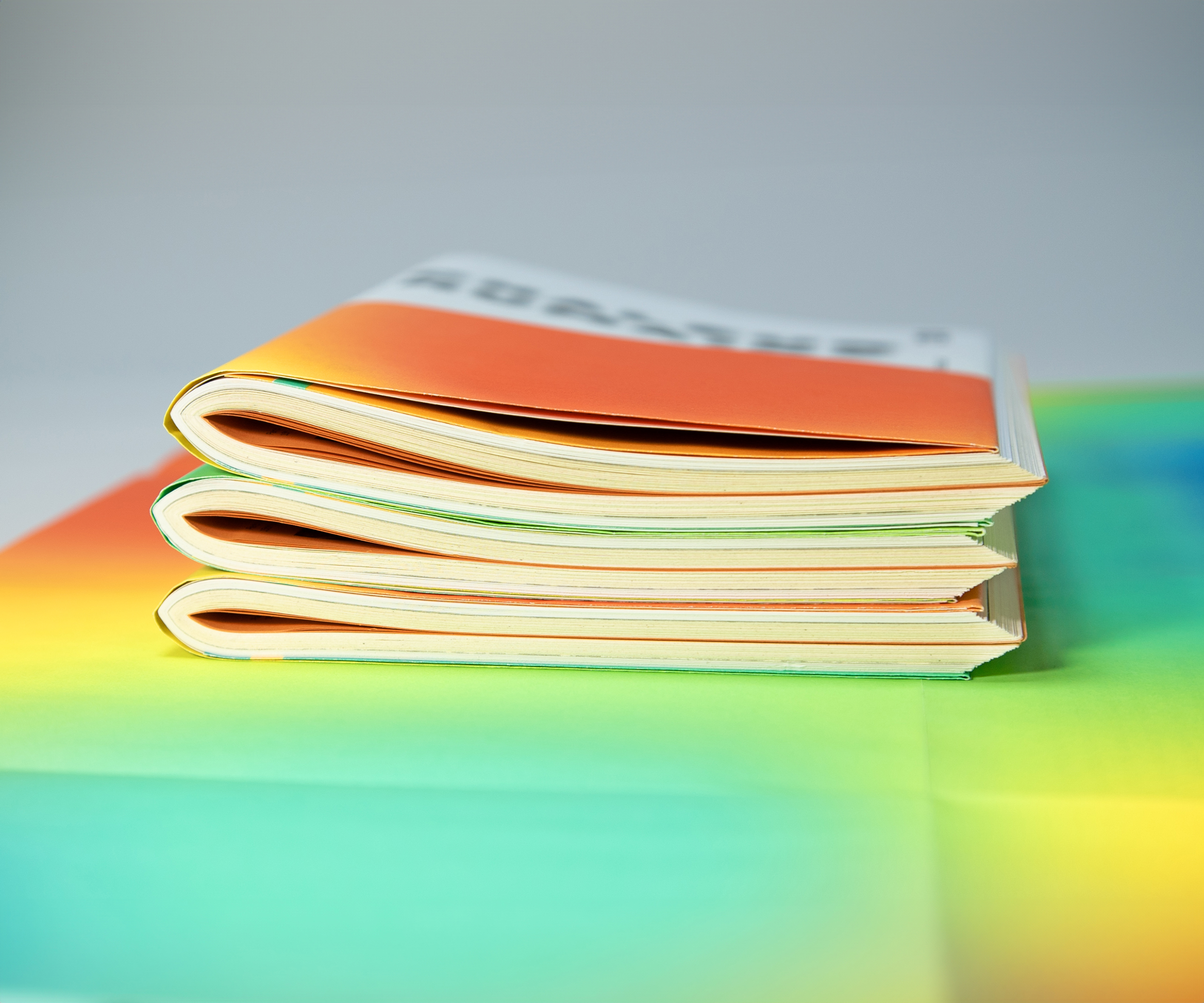
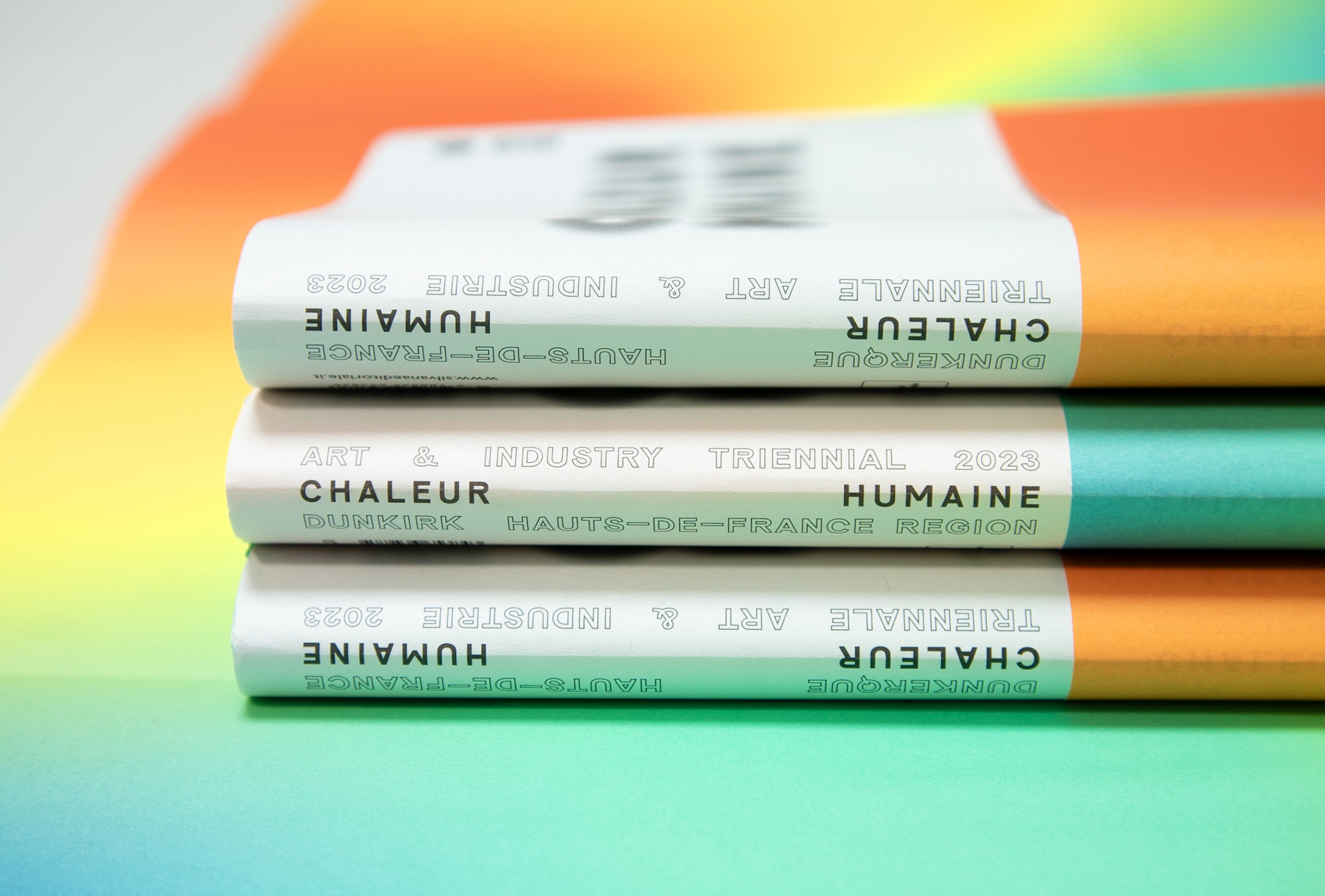
The cover is a double-sided folded jacket; one fold displays the French cover, the other the English. One sheet of paper: two covers. The book’s stapled binding lacks a traditional flat spine, therefore the jacket is designed to form a rounded spine visible on a bookshelf. The printer (Grafiche Aurora, Verona), papermaker (Fedrigoni, Milan) and publishing house (Silvana Editoriale, Milan) are 150 km from each other.